Why Choose a Reduction Gearbox for Industrial Applications?
In industrial equipment, motor speed rarely matches the needs of the driven machine. A conveyor may need steady movement under changing loads, while a mixer may require substantial turning force at a lower speed. A Reduction Gearbox helps bridge that gap by lowering output speed and increasing available torque. That matters.
Its value is practical, not merely theoretical. A correctly selected gearbox can help a motor operate within a suitable range and deliver controlled motion to equipment such as conveyors, packaging lines, pumps, and material-handling systems. The result may be smoother operation and less strain on connected components. However, performance depends on the complete drive system, not the gearbox alone. Motor power, load characteristics, operating hours, mounting position, and required gear ratio all influence the choice.
Selection deserves careful checking. Engineers and maintenance teams commonly review the equipment’s duty cycle, starting loads, ambient conditions, lubrication needs, and manufacturer ratings. They also inspect alignment and listen for unusual noise after installation; a small setup error can become an expensive problem over time. Efficiency, backlash, service access, and available space may matter too. A compact unit is not automatically the best one. Not always.
In practice, a calculation can miss how a machine behaves during repeated starts or sudden load changes. That is a reason to verify assumptions against real operating conditions and supplier documentation. This guide explains why industrial applications use reduction gearboxes, what benefits they can offer, and which selection details deserve a closer look.
How a Reduction Gearbox Changes Speed and Torque
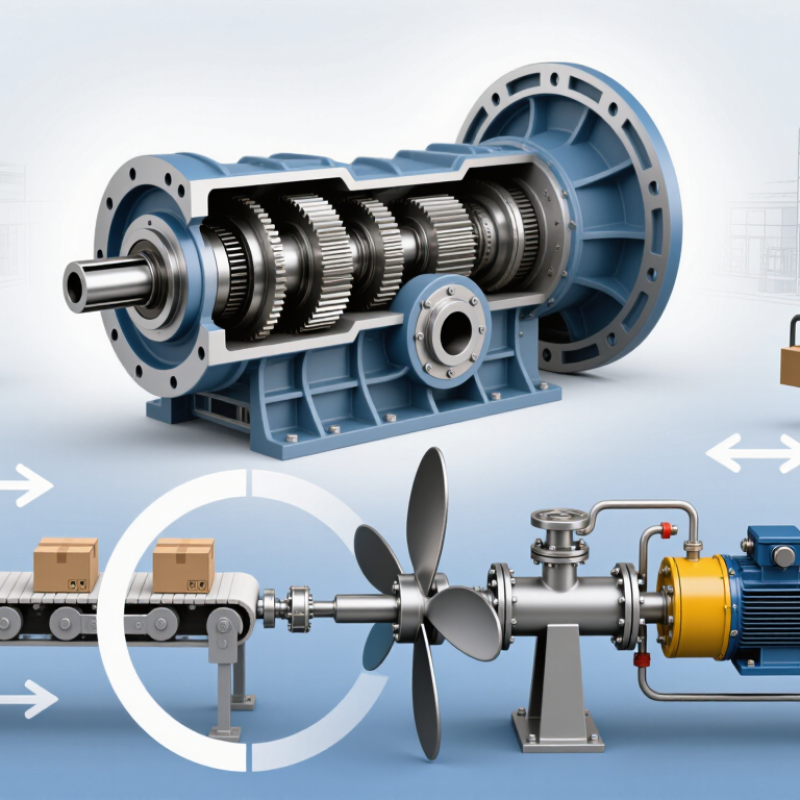
A reduction gearbox changes speed and torque through gear ratio. The ratio compares input speed with output speed. A 30:1 gearbox turns a 1,800-rpm motor into roughly 60 rpm at the output. In an ideal system, torque rises by the same ratio. Real gearboxes lose some energy to friction, so output torque is lower. Heat matters.
For illustration, at 95% efficiency, the output torque would be about 28.5 times the input torque, before considering service factors or transient loads. The U.S. Department of Energy’s Improving Motor and Drive System Performance: A Sourcebook for Industry reports that motor-driven systems use about 68% of electricity consumed in U.S. manufacturing. That figure covers whole motor systems, not gearboxes alone, but it shows why matching speed and load deserves attention. A gearbox that is too large can add cost and inertia; one that is too small may overheat under repeated starts. Check the actual duty cycle, mounting position, lubrication needs, and peak load. The calculation is tidy. The machine is not: shock loads and backlash can complicate the result.
Why Choose a Reduction Gearbox for Industrial Applications?
How a reduction gearbox changes speed and torque
As the reduction ratio increases, output speed decreases while output torque increases. This example assumes a 1 kW input at 1,500 rpm and 95% gearbox efficiency; actual performance varies with load and gearbox design.
Key Benefits for Industrial Machinery
A reduction gearbox helps industrial machinery trade speed for torque.
In a conveyor line, for example, a motor may spin too quickly to move a loaded belt steadily. The gearbox lowers output speed and increases available torque, helping the drive handle heavier loads. This can support controlled starts and reduce abrupt movement. The exact result depends on the gear ratio, motor, and operating conditions. More torque is useful, but it is not a free upgrade.
For mixers, hoists, and packaging equipment, a suitable gearbox can also make speed control more practical. It may help keep output consistent when material flow changes or a machine encounters brief load spikes. Correct sizing matters. An undersized unit can overheat or wear prematurely, while an oversized one may add cost and take up valuable space. Check the required output speed, duty cycle, mounting position, and expected loads before choosing. Real operating conditions can be messier than a specification sheet suggests.
Tips: Keep the gearbox aligned with the motor and driven shaft, and follow the maker’s lubrication schedule. Listen for new rattling or grinding sounds; they can signal a developing problem. Check temperature and oil condition during routine maintenance. Do not assume every gearbox runs quietly. A little vibration may be normal, but a sudden change deserves investigation.
Common Reduction Gearbox Types and Configurations
Why Choose a Reduction Gearbox for Industrial Applications?
Common Reduction Gearbox Types and Configurations
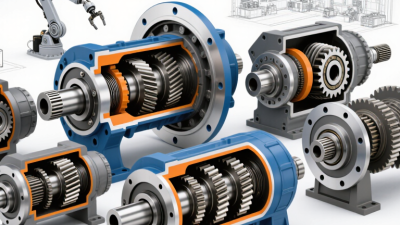
Helical gearboxes suit steady conveyors and mixers, where smooth, quiet operation matters. Bevel-helical units turn power through a right angle, useful when floor space is tight. Worm gearboxes also provide right-angle output and high reduction in a compact housing, though heat and efficiency need attention. Planetary gearboxes place several gears around a central sun gear; their compact design supports high torque density. Each type has trade-offs. There is no universal winner.
Configuration matters as much as gear type. Inline units keep input and output shafts aligned; right-angle units simplify layouts around walls or machine frames. Shaft-mounted models can reduce coupling hardware, but alignment and support still deserve care. The U.S. Department of Energy’s Improving Motor and Drive System Performance sourcebook reports that motor-driven systems account for about 69% of U.S. industrial electricity use. That figure is not a gearbox efficiency rating, but it shows why matching speed, load, and operating hours deserves attention. A rough selection can waste energy.
Tips: Check service factor, output torque, mounting position, and duty cycle against real operating conditions. Ask about lubrication and thermal limits, too. Catalog numbers help, but field loads can be messier. A little measurement beats guessing.
How to Select a Gearbox for an Industrial Application
Why Choose a Reduction Gearbox for Industrial Applications?
How to Select a Gearbox for an Industrial Application
Start with the machine, not the gearbox catalogue. Record the required output speed, load torque, operating hours, and starting frequency. A conveyor carrying wet aggregate may face sudden load changes, while a fan usually runs more steadily. Measure the real load. Motor nameplate power alone rarely tells the whole story.
Next, calculate the reduction ratio from motor speed and the target shaft speed. Check peak torque during startup, jams, or reversing, then allow for the duty cycle and an appropriate service factor. A reduction gearbox can increase output torque, but it cannot create power; friction and heat reduce efficiency. Do not guess. Verify thermal limits, especially in slow, continuous operation.
Fit matters too. Confirm shaft orientation, mounting position, available space, and the way the gearbox connects to the driven machine. Dust, washdown, vibration, and ambient temperature can change sealing and lubrication needs. Backlash may be acceptable on a conveyor but troublesome in precise positioning. One common oversight is choosing by rated torque alone. It looks simple on paper, yet real loads are uneven. If operating data is uncertain, measure it or review the selection with a qualified engineer before installation.
Installation, Maintenance, and Operating Considerations
Why Choose a Reduction Gearbox for Industrial Applications?
Installation, Maintenance, and Operating Considerations
A reduction gearbox can provide the torque and speed a process needs, but its performance depends on correct installation. The U.S. Department of Energy’s 2014 motor-systems sourcebook estimates that motor-driven systems use about 68% of U.S. manufacturing electricity. The IEA’s Energy Efficiency 2023 report places industry at roughly 37% of global final energy demand. These figures make drivetrain losses worth attention; they do not mean a gearbox upgrade alone will cut energy use.
Mount the gearbox on a rigid, level base. Check shaft alignment with measuring tools, not visual guesses, and confirm that the coupling does not force the shafts together. Verify lubricant type and fill level against the equipment specification before startup. Small details matter. A soft foot or pipe strain can introduce vibration that a quick test run may miss.
During operation, log temperature, noise, vibration, and oil condition at consistent intervals. ISO 20816 provides guidance for evaluating machine vibration, but readings need context: compare them with the gearbox’s baseline and operating load. Inspect seals and breathers for leaks or contamination. Avoid repeated shock loading and starts beyond the unit’s rated duty. Even good maintenance plans can miss gradual wear, so trend records matter more than one reassuring inspection.