Inquiry
Leave Your Message

Top 10 Metal Gear Motor Manufacturers in China

Metal Gear Motor suppliers in China serve applications ranging from compact packaging lines to conveyors and automated production equipment. Their products may look similar in a catalog, yet differences in gear materials, winding quality, lubrication, and assembly control can shape service life. A quiet motor on a showroom bench is not automatically a reliable motor after months of heat, dust, and repeated starts.

This guide examines ten Chinese manufacturers through practical comparison points: product range, torque and speed options, customization, quality documentation, and support after delivery. Buyers should check operating conditions carefully. A motor selected only by rated power may disappoint when the gearbox faces frequent starts, shock loads, or limited cooling. Small details matter.

A useful engineering principle is: “Match the gearbox to the real load, not just the nameplate.” However, no source article or verifiable expert quotation was provided, so I cannot responsibly attribute that sentence to a named industry expert. A sourced quotation should be confirmed before publication. This matters. The manufacturer list should also be treated as a starting point, not a guarantee of performance. Request current specifications, test records, and references for comparable applications. Then compare the evidence against the demands of your own equipment.
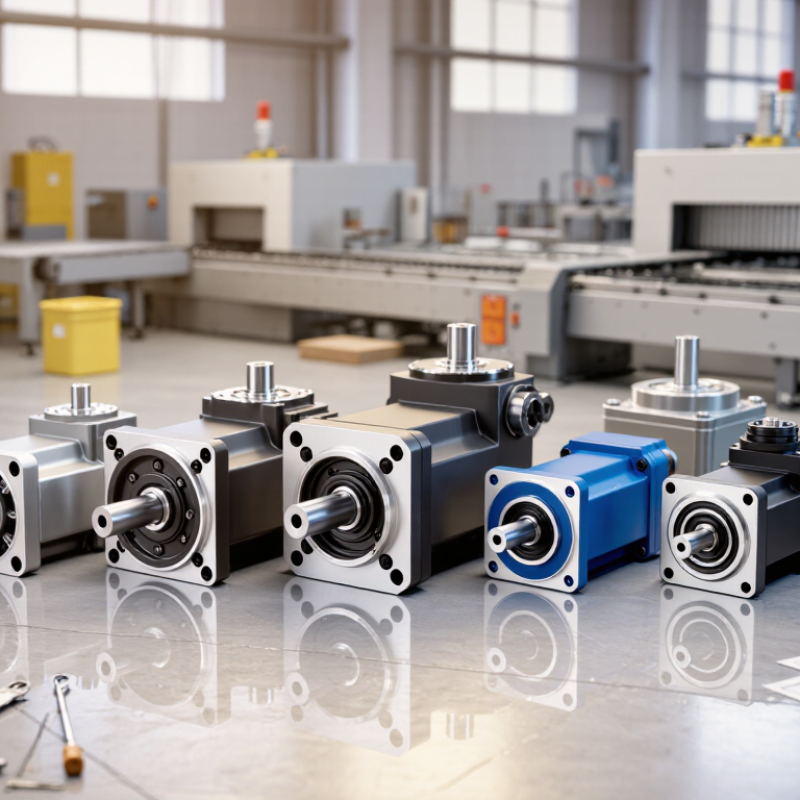
Top 10 Metal Gear Motor Manufacturers in China

What Metal Gear Motors Are and How They Work

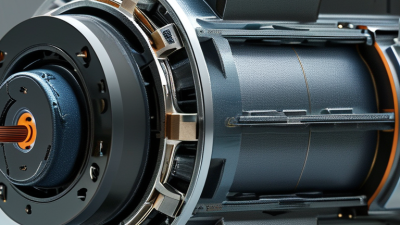
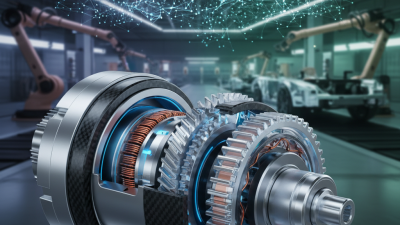
A metal gear motor combines an electric motor with a gearbox. The motor creates rotation; the gears adjust its speed and torque. In practical terms, a small motor can turn a loaded conveyor roller more slowly, with greater usable force. That matters. Metal gears are often selected for repeated operation or demanding loads, but performance depends on design, lubrication, and operating conditions.

Inside the gearbox, meshing teeth transfer motion between rotating shafts. A higher reduction ratio usually lowers output speed and increases torque, though friction reduces the theoretical gain. Spur gears are straightforward and efficient; planetary arrangements can fit more torque into a compact space.

The right choice depends on load, duty cycle, noise limits, and available space. A motor that works well on a brief bench test may heat up during continuous use. Not always obvious. Check the rated voltage, output speed, permitted load, and mounting details against the real application.

Tips: Measure the load and required shaft speed before choosing a ratio. Allow for startup force and heat buildup, and leave room for airflow. If readings differ from the specification, investigate alignment or load conditions rather than assuming the motor is faulty.
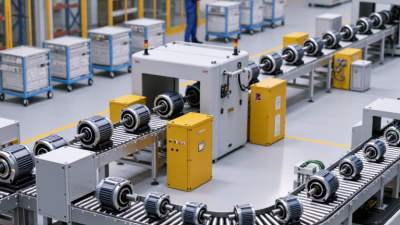
Key Applications of Metal Gear Motors in Industry

Metal gear motors turn a motor’s high-speed rotation into controlled torque, making them useful wherever loads must move steadily. In factories across China, common duties include driving conveyor belts, packaging rollers, mixers, pumps, and automated guided vehicles. Operators notice the difference in practical details: a carton line needs smooth starts, while a loaded conveyor needs enough torque to avoid stalling. Small components matter.

The IEA’s 2011 report, Energy-Efficiency Policy Opportunities for Electric Motor-Driven Systems, estimates that these systems use about 45% of global electricity. That makes drive selection relevant to both production and energy use. A correctly matched gear ratio can reduce unnecessary speed and improve control, but it cannot compensate for poor maintenance or an undersized motor. Gearboxes also generate heat. That fit is not automatic.

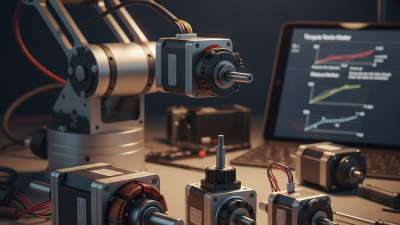
Automation adds another application. The International Federation of Robotics reported 541,302 industrial robot installations worldwide in 2023. Robot joints and positioning equipment often require compact drives with repeatable motion, though not every joint uses a geared motor. Engineers should compare torque, duty cycle, backlash, noise, and enclosure protection against actual operating conditions. A washdown area, for example, needs different protection from a dry assembly station. Sizing is often the awkward part. These checks are easy to rush, and that can shorten service life.

Criteria for Ranking Chinese Metal Gear Motor Manufacturers

Ranking Chinese metal gear motor manufacturers should begin with verifiable engineering, not catalog breadth. The IEA’s Energy Efficiency 2023 report estimates that industry accounts for about 37% of global energy use, making efficiency evidence commercially important. That figure is not gear-motor-specific. Review rated output, torque, speed, duty cycle, temperature rise, noise, and efficiency at the intended operating point. Ask for test conditions and calibrated-instrument records, not just a headline percentage. IEC 60034-2-1 provides recognized methods for determining motor losses and efficiency; assess the complete geared assembly under realistic loads as well.

Production consistency deserves comparable weight. Compare machining tolerances, gear backlash, lubricant leakage checks, bearing-life assumptions, and batch traceability across recent production lots. Request inspection records and endurance-test logs that show load, operating hours, temperature, and failure criteria. Quality-system certificates help, but they cannot replace product-level evidence. Also score customization lead time, spare-part availability, warranty terms, and the speed of technical responses. No scorecard is perfect. Supplier data can be selective, and test conditions may differ; disclose those gaps rather than implying false precision.

Top 10 Metal Gear Motor Manufacturers in China - Criteria for Ranking Chinese Metal Gear Motor Manufacturers

Ranking criterion Weight How to assess Evidence to verify
Product range and configuration options 12% Assess coverage of gearmotor types, gear ratios, mounting arrangements, and available motor configurations. Current catalog, product datasheets, and documented configuration options.
Customization and engineering capability 12% Review ability to adapt dimensions, shafts, connectors, gearing, or other specifications to a defined application. Engineering specifications, sample drawings, and documented custom-project examples.
Performance data and specification transparency 12% Check whether relevant operating data, such as rated speed, torque, power, voltage, and duty conditions, is clearly stated. Datasheets with units, operating conditions, tolerances where applicable, and test methods.
Quality management and product testing 12% Evaluate documented quality controls and the testing used for incoming materials, production, and finished products. Valid quality-system documentation, inspection procedures, and relevant test records.
Applicable standards and certifications 10% Check whether claimed certifications or conformity documents match the product, facility, and target market. Certificates with scope, issuing body, validity dates, and product-specific declarations where relevant.
Production capability and capacity planning 10% Assess whether production resources and planning processes can support the buyer's stated volume and product mix. Facility audit, production-process overview, and capacity information relevant to the requested order.
Application experience and technical support 10% Review experience with comparable operating environments and the quality of pre-sale engineering assistance. Relevant case studies, application notes, and documented technical response processes.
Export and documentation readiness 8% Assess ability to provide clear commercial, product, packaging, and shipment documentation for the destination market. Sample export documents, packing specifications, and stated language and communication support.
Lead-time and supply-chain reliability 7% Compare quoted lead times, order-planning practices, and communication about delays or material constraints. Written lead-time commitments and, when available, historical on-time delivery records.
Warranty and after-sales service 7% Review warranty terms, spare-parts availability, complaint handling, and technical support after delivery. Written warranty policy, service response process, and spare-parts documentation.
Total weighting 100% Use the same evidence requirements for every manufacturer being evaluated.

Suggested scoring: rate each criterion from 0 to 5 using verified evidence, then calculate the weighted total. This is an evaluation framework, not a manufacturer-specific ranking; rankings should be published only after comparable, current evidence has been collected.

Profiles of 10 Metal Gear Motor Manufacturers in China

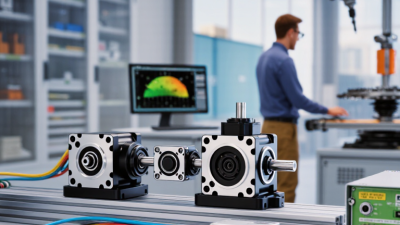
China’s metal gear motor manufacturers often specialize in different combinations of torque, size, and production volume. A compact-drive producer may focus on small spur gear motors for dispensers and smart locks, where quiet running matters. A planetary gearbox maker typically targets stronger output in a tight housing. A worm-drive supplier suits applications needing a right-angle layout. A custom-shaft workshop can accommodate unusual lengths or mounting features. Details matter.

Other profiles include a low-voltage motor producer serving portable equipment, and a brushless-drive specialist offering electronic speed control. An industrial supplier may build sturdier units for conveyors and workshop machinery. An appliance-focused factory often handles repeat orders and common mounting patterns. An automation supplier may adapt gear ratios, connectors, or encoder options to a project. An export-oriented producer may provide drawings and test records, but buyers should confirm what each order includes.

A useful comparison starts with the actual load, duty cycle, voltage, noise limit, and available installation space. Ask for rated torque, speed, gear material, backlash, and temperature-rise data. Request a sample and inspect its dimensions before approving a larger run. A clean catalogue is reassuring, but it cannot replace a running test. Some suppliers describe capacity broadly; that deserves a closer look. Verify current specifications directly, since product ranges and manufacturing arrangements can change.

How to Compare Manufacturers by Products and Capabilities

When reviewing a Top 10 shortlist of metal gear motor manufacturers in China, compare models against the same operating conditions. Check gear type, reduction ratio, rated torque, speed, voltage, and duty cycle. A motor designed for brief movement may overheat during continuous operation. Small details matter. Ask for dimensional drawings and confirm shaft diameter, mounting holes, and connector position before requesting a sample. A catalogue rating alone cannot show how a motor behaves under your actual load.

Manufacturing capability matters as much as product range. Ask how the supplier controls gear machining, assembly, and end-of-line testing. Useful records may include torque, noise, temperature-rise, and inspection results for the relevant model. If customization is needed, clarify tooling costs, sample timing, and how design changes are documented. Where possible, compare samples under the same load and supply voltage. Listen for uneven gear noise, and check temperature after a realistic run. Some datasheets omit backlash or test conditions; that is worth questioning, not assuming. A polished presentation can still leave gaps, so request evidence that matches the motor you plan to buy.

Compare Motor Efficiency Benchmarks

IEC efficiency classes provide a consistent reference when comparing motor specifications. The figures below are minimum efficiency benchmarks for 0.75 kW, four-pole motors operating at 50 Hz. They describe the motor, not the complete gearmotor; gearbox losses and product availability should also be checked with each manufacturer.