What is Magnet DC Motor and How Does it Work?
Magnet DC Motor has become essential in various applications. This type of motor is known for its compact design and efficient operation. Understanding how it works can reveal its significance in modern technology.
Magnet DC Motors use magnets to create a magnetic field. This field interacts with current flowing through coils, generating motion. Their simple construction makes them reliable and easy to maintain. However, not all Magnet DC Motors are created equal; some may suffer from issues like overheating.
These motors are widely used in robotics, electric vehicles, and industrial equipment. Their versatility is impressive, but they aren't without drawbacks. Performance can vary based on design and material quality. Exploring the intricacies of Magnet DC Motors can lead to better applications and innovations.
What is a Magnet DC Motor?
Magnet DC motors are a vital component in various applications, including robotics and electric vehicles. These motors use permanent magnets to establish a magnetic field, which interacts with the armature windings. The result is efficient motion generation. According to industry reports, over 50% of small motors today utilize permanent magnets due to their lighter weight and higher efficiency.
One intriguing aspect of magnet DC motors is their simplicity in design. They consist of fewer parts compared to other motor types, making them lighter and cheaper to produce. A study by the International Electrotechnical Commission (IEC) found that magnet DC motors can operate at efficiencies over 90%. However, challenges remain. The strength of the permanent magnet can degrade over time, which may lead to a decline in performance.
Another consideration is their limited torque characteristics at low speeds. This can hinder their use in certain applications. Users often need to balance between performance and longevity. As technology advances, innovations in materials and designs are essential for addressing these concerns. New research continues to explore ways to enhance the reliability and efficiency of these motors, ensuring their place in the future of electric power systems.
What is Magnet DC Motor and How Does it Work? - What is a Magnet DC Motor?
| Parameter |
Description |
Typical Values |
| Motor Type |
Type of motor using a permanent magnet for magnetic field generation. |
Permanent Magnet DC Motor |
| Operating Principle |
Works on the principle of electromagnetism where current through the armature winding generates torque. |
Electromagnetism |
| Applications |
Used in toys, automotive, robotics, and home appliances. |
Toys, Electric Vehicles, Industrial Machines |
| Efficiency |
Generally high efficiency with low maintenance requirements. |
80-90% |
| Speed Control |
Speed can be controlled by varying the supply voltage. |
Voltage Variation |
| Torque Characteristics |
Provides high starting torque, making it suitable for direct drive applications. |
High Starting Torque |
Components of a Magnet DC Motor
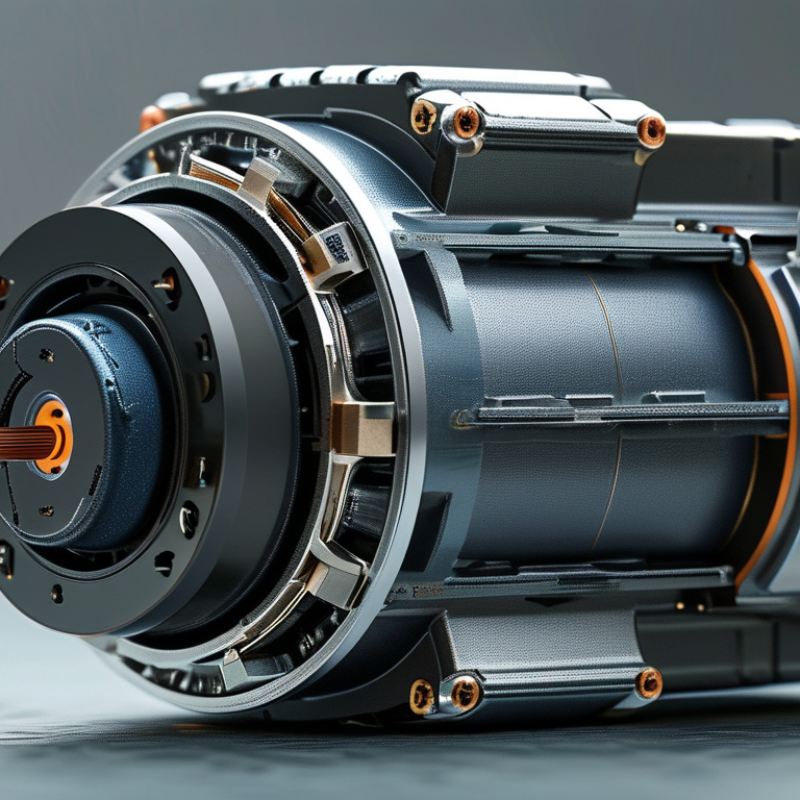
Magnet DC motors are widely used due to their simplicity and effectiveness. The core components of these motors include the stator, rotor, commutator, and brushes. Each plays a significant role in ensuring the motor operates smoothly.
The stator contains permanent magnets that create a magnetic field. This magnetic field interacts with the rotor, which is attached to an armature winding. As current flows through the winding, it generates a magnetic field. This interaction causes the rotor to spin, which is the essential function of the motor. Industry reports show that around 60% of electric vehicle applications rely on DC motors for their power systems.
Another critical component is the commutator. It helps convert DC into a mechanical rotation. Brushes apply current to the rotor, allowing it to make contact with the commutator. This system, while effective, can wear over time, necessitating periodic maintenance. Understanding these components enhances our ability to design more efficient motor systems, a knowledge highlighted by several engineering studies in the field.
Working Principle of a Magnet DC Motor
A Magnet DC Motor operates on simple principles of electromagnetism. The core components include a stator, rotor, commutator, and brushes. The stator houses permanent magnets, creating a steady magnetic field. The rotor, often called an armature, contains windings of wire. When a direct current flows through the rotor, it generates a magnetic field. This interacting field causes rotation.
The working principle hinges on the Lorentz force. As current flows, it creates a force on the rotor's windings, turning the armature. The commutator switches the current direction as the rotor spins, ensuring continuous motion. The brushes maintain contact with the rotating commutator, enabling consistent electrical flow.
While effective, Magnet DC Motors have limitations. They can produce vibrations and generate heat, impacting performance. The brushes wear out over time, requiring maintenance. Some users may notice inefficiencies in energy conversion. Understanding these drawbacks is essential for optimizing their use in various applications.
Applications of Magnet DC Motors
Magnet DC motors have gained traction in various industries due to their simplicity and efficiency. They are widely used in household appliances, robotics, and electric vehicles. According to a recent industry report, the global market for DC motors is projected to grow at a CAGR of 7.1% from 2022 to 2030. This growth is driven by increasing automation and demand for energy-efficient machines.
In robotics, Magnet DC motors provide precise control, enabling intricate movements. These motors are often favored in small robotic hands and drones. In the automotive sector, they play a crucial role in electric vehicles, enhancing performance and extending battery life. However, challenges remain. Some applications require high torque at low speeds, which Magnet DC motors may struggle to deliver efficiently.
Another important application is in HVAC systems, where Magnet DC motors contribute to energy savings. A report from the Department of Energy highlights that multi-speed motors improve efficiency by up to 30%. Yet, as technology advances, manufacturers must address reliability and design complexities. Balancing performance with cost-effectiveness poses a continual challenge in the evolving landscape of Magnet DC motors.
Applications of Magnet DC Motors
Advantages and Disadvantages of Magnet DC Motors
Magnet DC motors are widely utilized in various applications due to their unique features. They offer several advantages. For instance, they exhibit simple construction, which leads to easier maintenance. Additionally, they provide good torque characteristics at lower speeds, making them ideal for tasks requiring consistent power.
According to a report by MarketsandMarkets, the global DC motor market is projected to grow significantly, emphasizing the rising demand for efficient electric motors.
However, Magnet DC motors have some drawbacks. Their reliance on permanent magnets can limit their performance in high-temperature environments. Furthermore, they may struggle with efficiency at very high speeds. Some industry experts note that the magnetic field strength can diminish over time, which could affect the motor's overall performance.
Regular checks and adjustments are essential to mitigate these issues.
Understanding these nuances helps users make informed choices when selecting a motor for specific applications.