Inquiry
Leave Your Message

Top 10 Metal Gear Motor Manufacturers for Global Buyers

Metal Gear Motor selection is becoming a strategic purchasing decision, not merely a component search. These compact units combine a motor and gearbox, delivering controlled torque to conveyors, packaging lines, AGVs, medical equipment, and factory automation. Small footprint. Serious responsibility.

The International Energy Agency reports that electric motor systems consume roughly 70% of industrial electricity. This figure makes efficiency, duty cycles, maintenance, and control compatibility essential buying criteria. Recent market analyses from MarketsandMarkets and Grand View Research also indicate continued growth in gear motor demand, driven by automation, logistics, robotics, and energy-conscious manufacturing. Their estimates differ, however. Definitions and regional coverage are not always consistent.

Professor R. Krishnan, a respected electric-drive researcher and author, emphasizes a practical engineering principle: “The drive must be designed around the load, not around the motor.” That sentence deserves attention. A high-efficiency motor can still underperform when paired with the wrong gear ratio, insufficient thermal capacity, or poor duty-cycle assumptions.

This guide evaluates the top 10 Metal Gear Motor manufacturers for global buyers. It considers product range, torque performance, efficiency data, customization, certifications, service networks, lead times, and application experience. Brand visibility alone is not enough. A polished catalogue cannot replace verified test results or local technical support.

The ranking is useful, but not absolute. Buyer priorities vary. A food-processing plant may value washdown protection, while an e-commerce warehouse may prioritize rapid replacement. Readers should confirm current specifications directly with manufacturers before ordering. Data changes. Reality is sometimes less tidy.
Top 10 Metal Gear Motor Manufacturers for Global Buyers

Metal Gear Motors: Definition, Structure, and Industrial Applications

Metal Gear Motors: Definition, Structure, and Industrial Applications

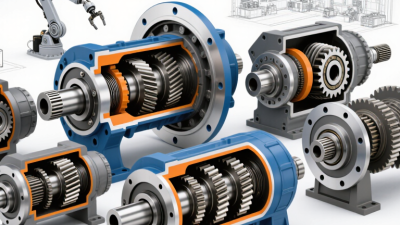
A metal gear motor combines an electric motor with a reduction gearbox. The motor creates rotational power, while the gears reduce speed and increase usable torque. This design supports controlled movement in compact equipment. Common internal parts include a stator, rotor, shafts, bearings, gears, seals, and a protective housing. Steel gears usually handle repeated loads well, but they may produce noticeable noise without accurate machining and suitable lubrication.

These motors serve conveyors, packaging machines, automated doors, medical equipment, small lifting systems, and factory robots. Their compact structure helps engineers save installation space. In practical equipment reviews, output torque, duty cycle, backlash, voltage, and mounting position often decide performance. A motor that looks powerful on paper may overheat during frequent starts. Selection is rarely perfect. Real operating conditions can expose weaknesses that laboratory figures miss.

Tips: Match the gearbox ratio to the required output speed, not only the motor’s rated power. Check load peaks, ambient temperature, shaft direction, and operating hours. Ask for efficiency data and service-life testing. Listen for unusual vibration. It can signal misalignment, worn bearings, or poor lubrication. Leave a safety margin, but avoid oversized motors, which may waste energy and space.

Key Criteria for Evaluating Global Gear Motor Manufacturers

Choosing among the Top 10 Metal Gear Motor Manufacturers for Global Buyers requires more than comparing prices. Efficiency, thermal control, and documented testing deserve priority. The International Energy Agency reports that electric motor systems consume nearly half of global electricity. Even small efficiency differences can affect factory costs for years.

Check whether each manufacturer follows IEC 60034-30-1 efficiency classifications. Ask for rated torque, service factor, noise levels, insulation class, and ingress protection details. A reliable supplier should provide test records, traceability, and clear tolerance data. ISO 9001 certification can support process consistency, but certification alone proves little. I would still inspect audit scope, complaint handling, and product samples. That part is often overlooked.

Tips: Request a 12-month failure-rate record. Compare warranty exclusions carefully. Confirm spare-part availability near your operating region. Review delivery performance, not only quoted lead time. The World Bank’s Logistics Performance Index shows major differences in customs and shipment reliability across markets, so export experience matters. Also examine lifecycle support, repair guidance, packaging quality, and technical response times. A compact gearbox may look efficient on paper, yet fail under heat, dust, or repeated starts. My own caution is simple: supplier rankings can hide uneven evidence. Weight verified field data more heavily than polished brochures.

Top 10 Metal Gear Motor Manufacturers for Global Buyers

Key criteria for evaluating global gear motor manufacturers, based on a practical procurement-weighting model used to compare suppliers without relying on company-specific performance data.

How to read the chart: Higher percentages indicate criteria that typically have greater influence on international gear motor purchasing decisions. Certification, efficiency, reliability, customization, delivery capability, lifecycle support, and total cost should be assessed together before supplier selection.

Top 10 Metal Gear Motor Manufacturers and Their Core Strengths

Top 10 Metal Gear Motor Manufacturers for Global Buyers

The global gear motor market is expanding steadily. Grand View Research reports a mid-single-digit compound annual growth rate through 2030. Metal gear motors remain important in conveyors, packaging machines, medical equipment, and compact automation.

Manufacturer 1 focuses on precision planetary units.
Manufacturer 2 excels in quiet helical gearboxes.
Manufacturer 3 offers hardened steel gears for heavy loads.
Manufacturer 4 is known for miniature motors used in robotics.
Manufacturer 5 develops corrosion-resistant stainless-steel assemblies.
Manufacturer 6 provides customized shafts, flanges, and connectors.
Manufacturer 7 emphasizes energy-efficient brushless systems.
Manufacturer 8 supports high-volume industrial production.
Manufacturer 9 specializes in low-backlash mechanisms.
Manufacturer 10 combines motors, sensors, and control electronics.

Their core strengths differ sharply. This matters.

According to the International Energy Agency, motors and related systems account for a significant share of industrial electricity use. Efficient gearing can reduce wasted power, but test conditions must be checked carefully. IEC 60034 standards help buyers compare motor performance, while ISO 9001 certification can indicate controlled production processes. Still, certification alone proves little about long-term reliability. Request load curves, thermal data, noise measurements, and lifetime testing. I have found that suppliers often highlight peak torque while hiding continuous-duty limits. That is a weakness worth questioning. A strong manufacturer should provide traceable materials, clear tolerances, sample testing, and realistic delivery data. Price remains useful, but it should not replace engineering evidence.

Comparing Quality, Customization, Certifications, and Global Support

Top 10 Metal Gear Motor Manufacturers for Global Buyers

Comparing Quality, Customization, Certifications, and Global Support

For global buyers, quality begins with repeatable performance, not polished brochures. The IEA reports that electric motor systems use roughly half of global electricity. Small efficiency losses can therefore become significant operating costs. Our evaluation should examine torque accuracy, thermal performance, noise, sealing, and service-life testing. Factory inspection records matter more than attractive catalog claims.

Customization separates capable manufacturers from simple resellers. Buyers should compare gear ratios, output shafts, mounting designs, voltage options, brakes, encoders, and IP ratings. A motor for a dusty packaging line needs different protection from one used indoors. Clear drawings and sample testing reduce costly redesigns. Still, customization can create delays. That trade-off deserves honest discussion.

Certifications offer useful evidence, but they are not complete proof. ISO’s 2023 Survey recorded more than 1.2 million ISO 9001 certificates worldwide, showing broad adoption of quality systems. Buyers should verify certificate scope, testing laboratories, and production-site details. Compliance with relevant IEC motor standards also supports safer technical comparisons. I would not accept a certificate scan alone.

Global support deserves equal weight. UNCTAD reports that more than 80% of world merchandise trade by volume moves by sea. Reliable suppliers should provide export packaging, spare-part planning, remote troubleshooting, and regional service contacts. Response time should be measured in writing. The final top ten may still be imperfect, because published data rarely reveals failure rates after several years. That uncertainty should remain visible.

How to Select the Right Metal Gear Motor Supplier for Your Needs

Selecting a metal gear motor supplier requires more than comparing catalog prices. Fortune Business Insights valued the global gear motor market at about USD 7.7 billion in 2024, with continued growth expected through 2032. That expansion creates more options, but quality varies. Ask suppliers for measured torque curves, gearbox efficiency, thermal limits, noise data, and documented testing procedures. A polished website proves little.

Match the motor to the real duty cycle. Record load torque, starting frequency, operating hours, ambient temperature, mounting position, and available voltage. Confirm whether the gearbox uses hardened steel gears, suitable seals, and replaceable bearings. The U.S. Department of Energy reports that motor-driven systems consume more than half of industrial electricity in the United States. Small efficiency losses can become expensive over thousands of operating hours. I have seen buyers focus on purchase price and overlook service access. That decision often becomes costly.

Tips: Request a sample unit and test it under your actual load. Check vibration after continuous operation, not only during a short demonstration. Review warranty terms, spare-parts availability, production capacity, and response times. Ask for inspection records tied to serial numbers. A supplier should explain failure limits clearly. Avoid vague promises. Certification is useful, but it cannot replace application testing. A perfect checklist does not exist. Your operating data matters more than a ranking.

Top 10 Metal Gear Motor Manufacturers for Global Buyers - How to Select the Right Metal Gear Motor Supplier for Your Needs

Rank Anonymous Supplier Profile Typical Product Focus Typical Output Power Typical Output Speed Typical Gear Ratio Common Protection Level Best Fit for Buyers
01 Profile A — High-volume standard manufacturer Compact spur and helical gear motors 6–250 W 10–500 rpm 3:1–300:1 IP54–IP65 Conveyors, feeders and general automation
02 Profile B — Precision motion specialist Low-backlash planetary gear motors 20–750 W 20–1,000 rpm 4:1–100:1 IP40–IP65 Robotics, indexing and positioning equipment
03 Profile C — Industrial worm-drive manufacturer Worm gear motors with self-locking options 40–2,200 W 5–300 rpm 7.5:1–100:1 IP55–IP66 Lifts, gates, valves and low-speed drives
04 Profile D — Stainless-steel washdown supplier Corrosion-resistant helical gear motors 25–1,500 W 8–400 rpm 5:1–200:1 IP66–IP69K Food, beverage and pharmaceutical machinery
05 Profile E — DC gear motor specialist Brushed and brushless DC gear motors 5–500 W 10–600 rpm 5:1–500:1 IP20–IP65 Battery-powered equipment and mobile systems
06 Profile F — AC motor and gearbox integrator Induction motor and helical gearbox assemblies 0.12–7.5 kW 8–450 rpm 4:1–250:1 IP55–IP66 Continuous-duty industrial machinery
07 Profile G — Custom OEM engineering supplier Application-specific gear motor assemblies 10–3,000 W 5–800 rpm 3:1–1,000:1 Specified by application Equipment builders requiring modified shafts or mounts
08 Profile H — Medical and laboratory motion supplier Quiet, compact precision gear motors 3–300 W 5–500 rpm 4:1–300:1 IP40–IP65 Pumps, analyzers and laboratory automation
09 Profile I — Agricultural and outdoor-duty supplier Sealed gear motors for harsh environments 50–2,000 W 10–350 rpm 5:1–200:1 IP65–IP67 Outdoor equipment, actuators and agricultural systems
10 Profile J — Cost-optimized export manufacturer Standard AC, DC and worm gear motors 6–1,500 W 8–600 rpm 3:1–500:1 IP44–IP65 Price-sensitive OEM and replacement applications

Key Supplier-Selection Criteria for Global Buyers

Evaluation Dimension What to Verify Recommended Buyer Requirement
Rated torque and duty cycle Continuous torque, peak torque, starting load and operating hours Select a motor with documented thermal capacity and an appropriate service factor
Voltage and control compatibility AC or DC input, rated voltage, current, encoder and controller requirements Request electrical drawings and confirm compatibility before sampling
Gearbox construction Gear material, lubrication, bearing arrangement, backlash and shaft design Match the gearbox type to precision, shock-load and noise requirements
Environmental protection Ingress protection, ambient temperature, humidity, chemicals and washdown exposure Choose the required IP rating based on the complete motor assembly
Compliance documentation Test reports, declarations, quality-system certificates and traceability records Require current documents applicable to the destination market
Customization capability Shafts, flanges, connectors, brakes, encoders, winding and cable options Confirm engineering lead time, tooling ownership and minimum order quantity
After-sales support Warranty terms, spare parts, failure analysis and technical response time Use a supplier that provides written warranty and long-term replacement support

Note: The supplier profiles are anonymized industry benchmark categories rather than named companies. Product ranges, protection ratings and suitability vary by model; buyers should confirm performance through current datasheets, test reports and application-specific quotations.