10 Best Step Motors for Precision Control in Automation?
In the world of automation, precision is key. Step motors play a crucial role in achieving this level of accuracy. These motors convert electrical pulses into precise rotational movements. Their capability makes them ideal for various applications, including 3D printers and CNC machines.
Choosing the right step motor can be challenging. There are numerous options, each with distinct specifications and performance metrics. Understanding your specific needs is vital. Factors like torque, speed, and resolution must be considered. Not all motors perform equally under different conditions. Some may excel in one area but fall short in another.
Exploring the best step motors can enhance automation setups significantly. This article aims to present a curated list of top choices. Each motor is evaluated based on reliability and performance. While some motors shine in particular applications, others may surprise you with their versatility. By examining these options, you can make an informed decision tailored to your project’s demands.
Key Features to Consider in Step Motors for Automation
When selecting step motors for automation, several key features demand attention.
Precision control is vital. The step angle is essential for determining accuracy.
A smaller step angle allows for finer adjustments. This precision can significantly impact machinery performance.
High-resolution stepping enables smoother operation and better control during tasks.
Torque is another crucial factor. Sufficient torque ensures that the motor can handle the load without stalling.
It's important to consider the motor’s holding torque too. If it’s inadequate, it could lead to unexpected movements and inefficiencies.
Moreover, pay attention to the speed ratings. Different applications may require varying speeds.
Understanding the ideal speed helps in optimizing the entire process.
Additionally, thermal management plays a role in motor reliability.
High operational temperatures can shorten lifespan. It might be helpful to look for motors with built-in protection features.
They can prevent overheating and maintain performance. Remember, not all motors operate efficiently under the same conditions.
Testing different configurations can yield better results.
Types of Step Motors and Their Applications in Precision Control
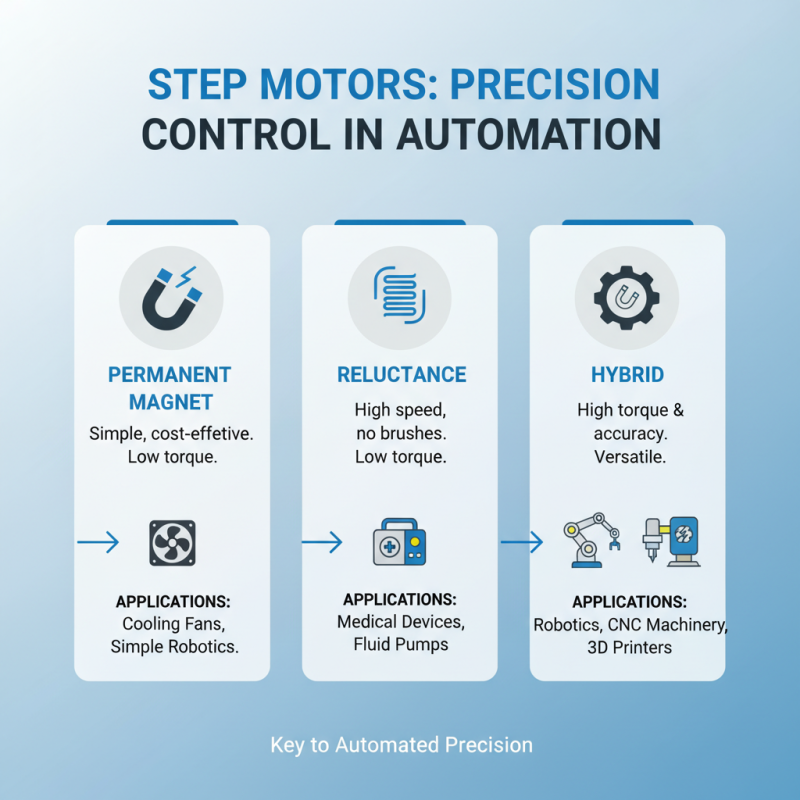
In the realm of automation, step motors play a crucial role in achieving precision control. There are various types of step motors, including permanent magnet, reluctance, and hybrid step motors. Each type brings unique advantages to different applications. For instance, hybrid step motors are renowned for their high torque and accuracy, making them ideal for robotics and CNC machinery.
According to a recent industry report from MarketsandMarkets, the step motor market is expected to grow significantly, reaching approximately $4 billion by 2025. This growth underscores the increasing demand for precision control in sectors like manufacturing and medical devices. As engineers embrace advanced automation, understanding these motor types becomes pivotal.
Tip: When selecting a step motor, consider the load requirements and desired precision. Matching these factors will enhance performance.
Moreover, not all step motors deliver the same results under varying conditions. Reliability can be affected by environmental factors such as temperature and humidity. This variability necessitates thoughtful selection and testing.
Tip: Regular maintenance and monitoring can help mitigate issues related to prolonged usage. Be prepared to adjust parameters as operational demands change.
Top 10 Step Motors Reviewed for Automation Systems
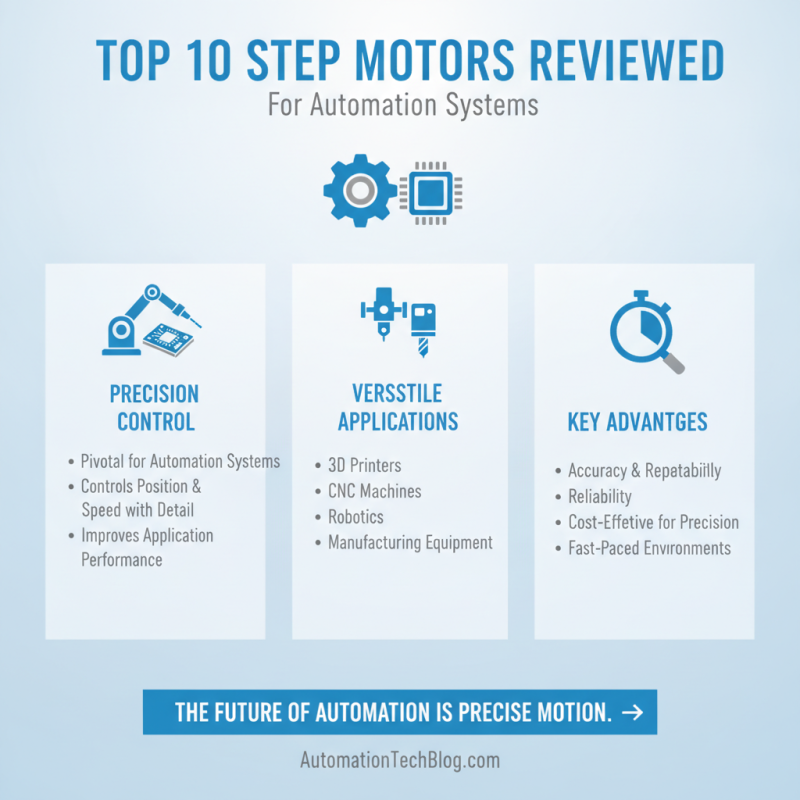
When it comes to automation systems, step motors are pivotal for precision control. The right step motor can dramatically improve the performance of various applications. From 3D printers to CNC machines, these motors provide the accuracy needed in today's fast-paced manufacturing environments. Their ability to control position and speed with great detail makes them indispensable in automation.
Reviewing the top step motors reveals a variety of options. Some offer high torque at low speeds, while others excel in rapid movement. Selecting the right type depends on specific application needs. Many potential users often overlook the importance of torque curves and step angles. Understanding these factors can lead to better system efficiency. Reliability is also crucial. A motor that frequently stalls can disrupt production, causing delays and costly mistakes.
In the quest for precision, it’s vital to consider not just specifications but also real-world performance. Many engineers report discrepancies between tests and practical usage. This underlines the need for hands-on evaluation. Choosing a step motor is not merely about the numbers; it’s about finding the right fit for your unique challenges. The path to success in automation systems often involves trial and error. Embracing this process can lead to better outcomes.
Comparative Analysis of Performance Metrics in Step Motors
When evaluating step motors for automation, performance metrics play a vital role.
Precision control is paramount in applications requiring exact movements.
Factors such as torque, step accuracy, and thermal performance must be analyzed.
A motor's ability to maintain stability under load is essential. Variability in these metrics can lead to operational inefficiencies.
Understanding the intricacies of step motors is crucial for making informed decisions.
Not all motors behave the same under varied conditions. For instance, some may exhibit superior holding torque, while others lag in step resolution.
These discrepancies can affect automation tasks significantly. Moreover, heat generation can influence motor longevity and reliability in real-world applications.
Selecting the right step motor involves trade-offs.
Higher torque often comes at the expense of speed.
Conversely, a motor optimized for speed might sacrifice precision.
Testing in actual application scenarios is necessary to uncover these nuances. Analyzing performance metrics in context reveals a more comprehensive picture.
Each use case may demand a unique set of characteristics from a motor.
Installation and Maintenance Tips for Optimal Step Motor Performance
When working with step motors, proper installation and maintenance are key to achieving high performance in automation systems. Selecting the right mounting position significantly impacts the motor's efficiency. Ensure there is adequate clearance around the motor for heat dissipation. Ventilation is vital. Overheating can lead to failure.
Regularly check for loose connections and wear. A misaligned connection can cause unnecessary strain. Inspect cables for signs of fraying or damage. Keeping everything secure will ensure smoother operation. It’s a simple task but often overlooked.
Lubrication is another critical factor. Applying the correct type and amount of grease prevents wear on moving parts. Too little lubrication can cause friction, while too much can trap dirt. Finding balance in maintenance is important. Be aware of the environment as dust and moisture can impact motor performance. Regular cleaning can help create a longer lifespan for step motors. Always reflect on these practices for optimal results.
10 Best Step Motors for Precision Control in Automation
| Motor Model |
Holding Torque (Nm) |
Step Angle (degrees) |
Current Rating (A) |
Weight (kg) |
Price Range (USD) |
| Model A |
0.45 |
1.8 |
1.0 |
1.2 |
50-70 |
| Model B |
0.65 |
1.8 |
1.2 |
1.5 |
70-90 |
| Model C |
0.90 |
1.8 |
1.5 |
1.8 |
90-110 |
| Model D |
0.75 |
1.8 |
1.3 |
1.4 |
80-100 |
| Model E |
0.55 |
1.8 |
1.1 |
1.3 |
60-80 |
| Model F |
0.85 |
1.8 |
1.4 |
2.0 |
100-120 |
| Model G |
0.95 |
1.8 |
1.5 |
2.1 |
110-130 |
| Model H |
0.70 |
1.8 |
1.2 |
1.6 |
70-90 |
| Model I |
1.05 |
1.8 |
1.6 |
2.5 |
120-140 |
| Model J |
1.20 |
1.8 |
1.8 |
2.8 |
130-150 |