What Are the Top Types of Planetary Gearboxes?
Choosing the right planetary design can determine whether a machine runs smoothly or struggles under load. Planetary Gearboxes combine compact dimensions, high torque density, and efficient power transmission. Their shared-load arrangement also helps reduce stress on individual gears. Yet performance depends on more than a catalog torque rating.
This guide examines the top types used in industrial automation, robotics, conveyors, vehicle systems, and precision equipment. Simple planetary gearboxes suit general reduction duties and moderate loads. Compound planetary designs provide higher reduction ratios within limited space. Helical planetary gearboxes improve contact between teeth, often reducing vibration and operating noise. Bevel planetary models redirect motion through an angled output, which helps in compact right-angle installations.
There are practical differences.
Some manufacturers use different names for similar configurations. Classification is not always neat. That can confuse buyers comparing specifications from separate brands. A reliable evaluation should consider ratio, backlash, efficiency, thermal capacity, bearing arrangement, lubrication, and expected duty cycle. For example, a robotic joint may need low backlash and repeatable positioning, while a conveyor drive may prioritize durability and continuous torque.
The discussion below connects gearbox structure with real operating demands. It also recognizes an important limitation: no design is ideal for every machine. Installation accuracy, alignment, lubrication, and maintenance can change results significantly. By reviewing each type carefully, engineers and equipment buyers can make decisions based on measured requirements rather than attractive marketing claims.
Planetary Gearbox Design and Operating Principles
What Are the Top Types of Planetary Gearboxes?
Planetary Gearbox Design and Operating Principles
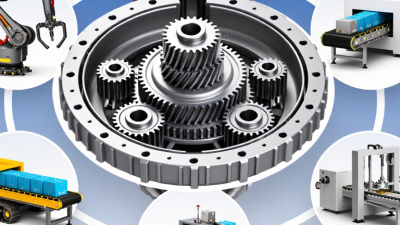
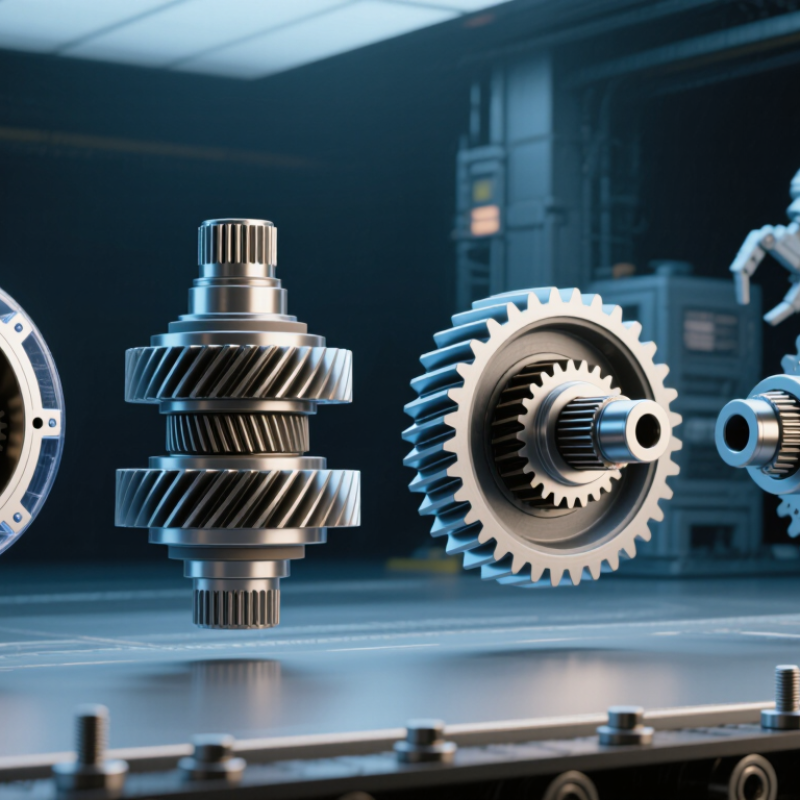
A planetary gearbox uses three primary elements: the sun gear, planet gears, and ring gear. The planet gears rotate around the sun while their carrier holds each shaft in position. One member receives input, another provides output, and the third is fixed. Changing this arrangement changes speed, torque, and rotation direction. Small details matter.
A single-stage planetary gearbox offers compact reduction and efficient torque transfer. Multi-stage designs combine several gear sets for higher reduction ratios. Compound planetary systems use connected planet gears to increase torque density. Differential planetary gearboxes allow two outputs to respond to different speeds, which suits specialized motion systems. In practice, teeth count controls the ratio. With the ring gear fixed, the carrier usually turns slower than the sun gear and produces higher torque.
Load sharing is a major design advantage. Several planet gears distribute force around the ring gear, reducing stress on one contact point. Yet equal sharing is never perfect. Manufacturing tolerances, shaft flexibility, and assembly errors can shift the load. That assumption is convenient, but incomplete. During inspection, uneven tooth polishing may reveal misalignment before noise becomes obvious. Lubrication must also match speed, temperature, and load conditions. Too little lubricant increases wear; too much can create drag and heat. Designers often overlook housing stiffness, even though it affects backlash and gear alignment. A reliable gearbox is not defined by its ratio alone.
What Are the Top Types of Planetary Gearboxes?
Planetary gearboxes use a sun gear, planet gears, a carrier, and a ring gear. The chart compares typical reduction-ratio ranges for common planetary gearbox arrangements. Actual performance depends on tooth counts, load, lubrication, speed, and the selected input, output, and fixed members.
Simple planetary stages generally provide compact reduction with high torque density. Compound and multi-stage arrangements extend the ratio range, while stepped and differential designs are selected when multiple operating ratios or specialized motion relationships are required.
Single-Stage Planetary Gearboxes: Structure and Performance
Single-stage planetary gearboxes use a sun gear, several planet gears, an internal ring gear, and a carrier. Their compact layout shares torque across multiple tooth contacts. This creates high torque density and strong radial balance. Typical reduction ratios range from 3:1 to 10:1. Efficiency often reaches 95–98% under suitable load, lubrication, and alignment conditions.
A 2024 global planetary gearbox market analysis projects approximately 8% compound annual growth through 2030. That trend reflects demand from robotics, automated production, and electric mobility. However, market growth does not guarantee identical performance. A gearbox rated for 500 Nm may require derating under shock loads or poor thermal conditions. ISO load-rating methods and AGMA design practices help engineers check tooth stress, bearing life, and contact fatigue.
Practical inspection begins with backlash, oil temperature, and mounting accuracy. Small errors matter. Uneven planet spacing can increase vibration and shorten bearing life. Helical teeth may reduce noise, but they introduce axial forces and added bearing requirements. A single-stage design also cannot provide the extreme reduction ratios of multi-stage systems. That limitation is easy to overlook. Designers sometimes select a smaller unit to save space, then discover inadequate heat dissipation. A clear service factor and measured duty cycle remain more reliable than catalog torque alone.
Multi-Stage Planetary Gearboxes: Ratios and Applications
Multi-stage planetary gearboxes achieve high reduction ratios in a compact housing. Each added stage multiplies the ratio, often reaching 10:1 to above 1,000:1. A two-stage unit may deliver 25:1, while three stages can exceed 100:1. Exact performance depends on tooth counts, load sharing, lubrication, and manufacturing accuracy.
The application case is substantial. Grand View Research reported that the global gearbox market reached approximately USD 28.6 billion in 2022, with a projected 5.6% compound annual growth rate through 2030. Planetary designs support this growth where space and torque matter. Wind turbines use them between slow rotor shafts and high-speed generators. The Global Wind Energy Council recorded 117 gigawatts of new wind capacity in 2023. That expansion increases demand for compact transmission systems.
Electric mobility adds another pressure point. The International Energy Agency reported more than 17 million electric cars were sold worldwide in 2023. Multi-stage planetary units can provide strong launch torque and efficient speed conversion within limited vehicle space. They also appear in robotics, aerospace actuators, industrial indexing systems, and automated machinery.
More stages are not always better. They increase friction, heat, noise, and maintenance sensitivity. A high ratio can look impressive. It may still waste energy under light loads. Engineers should verify torque cycles, shock loads, backlash, thermal limits, and service intervals before selecting the ratio. In practice, the perfect design is often a compromise.
What Are the Top Types of Planetary Gearboxes? - Multi-Stage Planetary Gearboxes: Ratios and Applications
Typical engineering ranges vary with tooth counts, load, lubrication, speed, thermal conditions, and gearbox design.
| Planetary Gearbox Type |
Number of Stages |
Typical Reduction Ratio |
Typical Efficiency |
Main Advantages |
Typical Applications |
| Single-Stage Planetary |
1 |
Approximately 3:1 to 10:1 |
About 95% to 98% per stage |
High torque density, compact construction, low relative inertia, and good load sharing |
Robotics joints, conveyor drives, servo positioning, packaging equipment, and machine tools |
| Two-Stage Planetary |
2 |
Approximately 9:1 to 100:1 |
About 90% to 96% overall |
Higher reduction in a short housing with a useful balance between torque, speed, and size |
Automated assembly, industrial robots, indexing systems, medical equipment, and lifting mechanisms |
| Three-Stage Planetary |
3 |
Approximately 27:1 to 1,000:1 |
About 85% to 94% overall |
Very high torque multiplication and low output speed without requiring a large gear diameter |
Heavy-duty actuators, winches, hoists, tracked vehicles, mixers, and high-load automation |
| Compound Planetary |
1 or more compound stages |
Commonly above 10:1 in one stage; higher ratios are possible |
Typically lower than a simple planetary stage because of additional mesh contacts |
High reduction from a compact arrangement and strong torque capacity |
Compact transmission systems, aerospace mechanisms, precision actuators, and specialized industrial drives |
| High-Speed Planetary |
Usually 1 to 3 |
Approximately 3:1 to 100:1 |
Often about 93% to 98% overall, depending on stage count and speed |
Supports high input speeds, rapid acceleration, and precise motion control |
Servo motors, machine tools, high-speed automation, test equipment, and printing machinery |
| High-Torque Planetary |
Usually 2 to 4 |
Approximately 20:1 to 1,000:1 |
About 85% to 95% overall, depending on the configuration |
Handles high continuous and peak torque with strong radial load capability |
Construction equipment, marine drives, renewable-energy machinery, cranes, and material-handling systems |
Specialized Planetary Gearbox Types for Industrial Use
What Are the Top Types of Planetary Gearboxes?
Specialized planetary gearboxes serve different industrial demands, not just different speed ratios. Standard inline planetary units fit conveyors, pumps, and indexing tables. Their coaxial design saves space and transfers torque through multiple planet gears. Helical planetary gearboxes reduce noise and improve load sharing. They suit continuous-duty machinery operating near workers.
Right-angle planetary gearboxes turn the output by 90 degrees. They help when a motor cannot align with the driven shaft. This layout is useful in compact packaging machines and automated material-handling systems. However, the angular stage can introduce efficiency losses and additional heat. Thermal testing remains essential.
Precision planetary gearboxes offer low backlash for robotic arms, inspection equipment, and servo axes. Their carefully controlled gear tolerances support accurate positioning during repeated motion. High-torque planetary models handle mixers, hoists, and heavy-duty conveyors. A larger housing does not always mean better performance. Lubrication, bearing capacity, shock loads, and duty cycles matter more than size alone. Washdown-rated versions use sealed housings and corrosion-resistant materials for food and chemical processing areas. Cleanability must be verified, not assumed. In field evaluations, a gearbox may meet its catalog torque yet fail early under frequent starts and poor alignment. Engineers should check mounting stiffness, service temperature, radial loads, and maintenance access before selecting a specialized type. No gearbox is perfect. That is worth remembering.
How to Select the Right Planetary Gearbox Type
Selecting a planetary gearbox starts with the load, not the catalogue picture.
MarketsandMarkets forecasts the planetary gearbox market to grow from USD 13.7 billion in 2023 to USD 18.7 billion by 2028. Automation, robotics, and mobile equipment drive much of this demand. I usually record continuous torque, peak torque, speed, duty cycle, temperature, and radial load. Miss one variable, and a quiet gearbox can become an expensive failure.
A spreadsheet helps.
Inline planetary units suit aligned shafts and high reduction in limited spaces. Right-angle planetary gearboxes use bevel stages when the motor and driven shaft must turn ninety degrees. They save layout space, but add complexity, losses, and alignment sensitivity.
For smooth servo motion, choose helical tooth forms and low backlash. For simpler, cost-conscious machinery, spur planetary stages may be adequate. Multi-stage designs reach higher ratios, although efficiency falls with every added mesh. A 10:1 ratio may need one stage; 100:1 commonly needs several.
Check datasheets for rated torque, not merely short-duration peak torque. Grand View Research identifies industrial automation and transportation as important planetary gear applications. That trend makes thermal testing increasingly important. Compare lubrication limits, bearing capacity, noise, service life, and torsional stiffness. Ask for measured backlash, not an attractive adjective.
I once underestimated peak acceleration in a compact axis; the selected unit passed steady-load calculations but overheated during rapid reversals. The lesson remains uncomfortable: application data beats habit.