Top Motor Reducers at 2026 Canton Fair What to Expect?
The upcoming 2026 Canton Fair is set to highlight the latest innovations in the "Motor Reducer" industry. With advancements in manufacturing technology, motor reducers play a critical role in various applications, enhancing efficiency and performance. According to a recent report by Global Market Insights, the motor reducer market is projected to experience a compound annual growth rate of 6.5% from 2023 to 2030. This surge reflects an increasing demand across sectors such as automation and renewable energy.
Industry expert Dr. Emily Zhao states, "Motor reducers are pivotal in driving the machinery of tomorrow." The Canton Fair provides a unique platform for businesses to connect and explore these advancements. The integration of AI-powered search and navigation tools will allow visitors to efficiently locate suppliers that meet specific standards, such as ISO and CE certifications.
With an expansive venue of 1.55 million square meters, the fair promises a myriad of opportunities. However, manufacturers must also address challenges such as rising costs and supply chain disruptions. The focus on quality and technological advancements will be vital for staying competitive in the evolving market. Expect engaging discussions and innovative solutions at the fair, shaping the future of motor reducers.
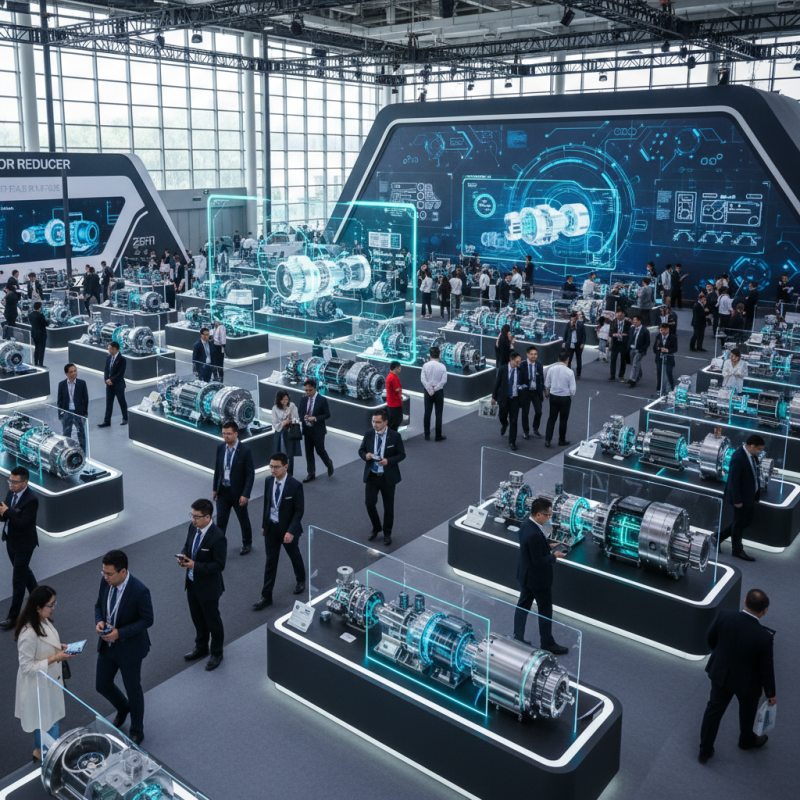
Overview of Motor Reducers and Their Importance in Industry
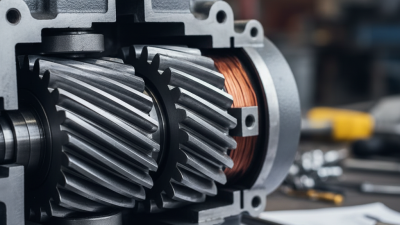
Motor reducers play a vital role in the world of industrial machinery. They transform high-speed motor output into lower speeds with more torque. This shift is essential in various applications, such as conveyors, compressors, and robotics. According to industry reports, the global gear reducer market is projected to reach $17 billion by 2026, highlighting their importance.
The efficiency of motor reducers directly affects operational productivity. Proper calibration and maintenance can yield better performance. However, many industries often overlook regular checks. A significant number of facilities report unexpected downtime due to malfunctioning reducers. This lack of foresight can lead to costly delays in production schedules. The industry must recognize this and invest in reliable technology and regular maintenance routines.
Understanding the specific needs for motor reducers is crucial for maximizing output. Customization in sizes and ratios allows for better adaptability. Yet, not all companies prioritize this flexibility. Many stick to standard models, which may not meet unique operational demands. This limitation can stifle innovation and growth. Improving attention to motor reducer specifications can foster more efficient industrial processes and address potential gaps in performance.
Key Trends in Motor Reducer Technology Anticipated for 2026
The 2026 Canton Fair will spotlight key trends in motor reducer technology. Industry analysts predict a significant shift towards increased energy efficiency. Recent reports indicate that 60% of manufacturers aim to reduce energy consumption by 15% within the next five years. This push aligns with global sustainability goals and reflects a growing demand for eco-friendly solutions.
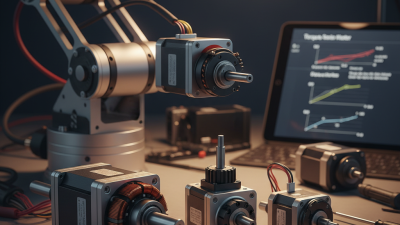
AI integration is another major trend. Machines equipped with smart sensors can optimize performance. Such advancements may lead to better load management and extended lifespan of equipment. The market for AI-driven motor reducers is expected to grow by 25% annually as industries seek automation to enhance productivity.
Tips: Focus on energy-efficient models. These can save costs while meeting compliance regulations. Also, explore AI-enhanced options for better performance insights. However, businesses should carefully assess the total cost of ownership. Not all new technologies deliver immediate returns. After all, balancing innovation with practical implementation can be challenging.
Major Exhibitors Showcasing Motor Reducers at the Canton Fair
The 2026 Canton Fair is brimming with excitement, especially for motor reducer enthusiasts. Major exhibitors from various regions are set to showcase their latest innovations in this field. Visitors can expect state-of-the-art designs and technology that enhance efficiency and durability. Many exhibitors prioritize energy-saving solutions, which are crucial in today’s industrial landscape.
However, not all displayed products may meet the highest standards. Some might lack the sophisticated features that buyers really need. Attendees should take their time assessing these products carefully. Focus on their specifications and how they compare in real-world applications. Engaging with the exhibitors can provide a wealth of knowledge, but be wary of marketing hype. It’s essential to ask the right questions to avoid pitfalls in your purchases.
This year’s fair promises diversity in product offerings and technologies. Motor reducers play a vital role in numerous industries, from manufacturing to automation. Understanding the latest trends and challenges will help inform better decisions. As the fair approaches, anticipation builds for what might be unveiled, while also knowing that not everything is perfect.
Top Motor Reducers at 2026 Canton Fair What to Expect?
| Exhibitor Type |
Power Range (kW) |
Reduction Ratio |
Applications |
Country of Origin |
| Gearbox Manufacturers |
0.5 - 200 |
3:1 - 300:1 |
Industrial Automation |
China |
| Electronics Suppliers |
0.1 - 150 |
5:1 - 200:1 |
Robotics |
Germany |
| Heavy Machinery |
1 - 500 |
2:1 - 150:1 |
Construction Equipment |
USA |
| Consumer Appliances |
0.01 - 10 |
10:1 - 100:1 |
Home Automation |
Japan |
| Renewable Energy |
0.5 - 300 |
1:1 - 50:1 |
Wind Turbines |
Denmark |
Market Demand and Future Prospects for Motor Reducers in 2026
The demand for motor reducers is steadily increasing, driven by innovation in automation. A recent report from the International Mechanical Engineering Society predicted that the global market for motor reducers would grow by around 7% annually through 2026. This surge is largely fueled by sectors like manufacturing, automotive, and robotics. These industries are seeking more efficient, reliable solutions.
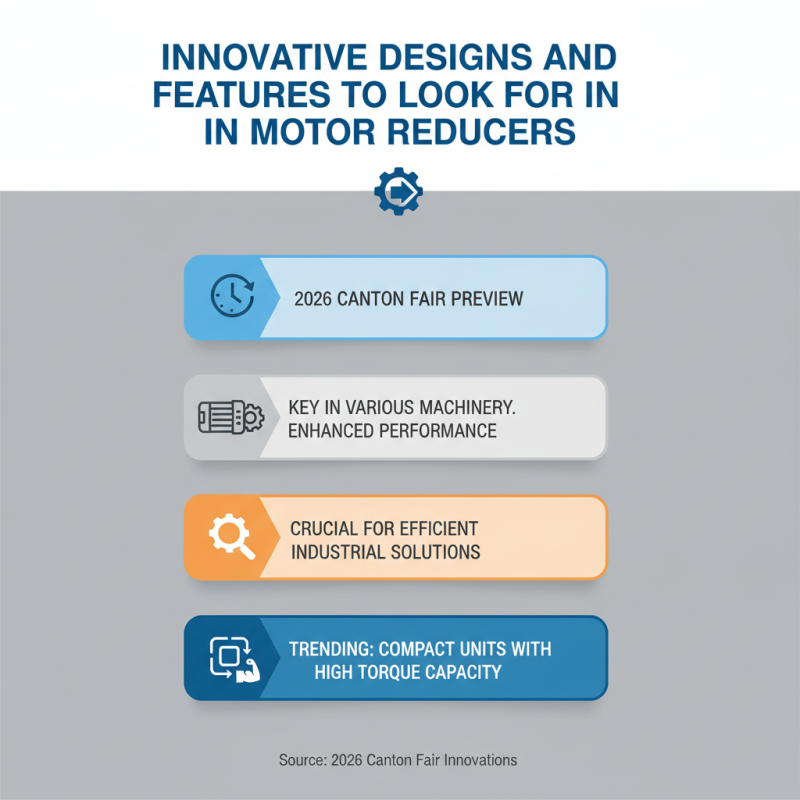
Moreover, advancements in technology are changing the landscape. Many companies are looking for compact designs that do not compromise on performance. Buyers are also showing an increased preference for energy-efficient models. According to a survey by the Global Automation Council, approximately 65% of industry leaders are planning to invest in energy-saving equipment in the next two years.
Yet, this growth does not come without challenges. The production costs of high-quality materials are rising. Companies must balance quality with cost-effectiveness. As the market evolves, manufacturers need to stay adaptable and innovate constantly. There is a persistent pressure to reduce delivery times while maintaining excellence. Businesses should rethink their strategies to keep up with these demands and leverage new technologies effectively.