What is a Helical Geared Motor and How Does it Work?
The Helical Geared Motor is a significant component in various industrial applications. It combines advanced design with precise engineering. According to industry reports, the global market for these motors is expected to grow by 5.6% annually, driven by demand in automation and robotics.
This motor features a unique helical gear system. It delivers high torque with minimal noise levels. Its efficiency makes it a preferred choice in many sectors. However, one must not overlook the potential drawbacks, such as wear and tear over time.
In choosing a Helical Geared Motor, quality and durability are crucial. The efficiency and performance benefits can be compelling. Still, operational challenges should be carefully considered. Understanding these factors is essential for making informed decisions.
What is a Helical Geared Motor?
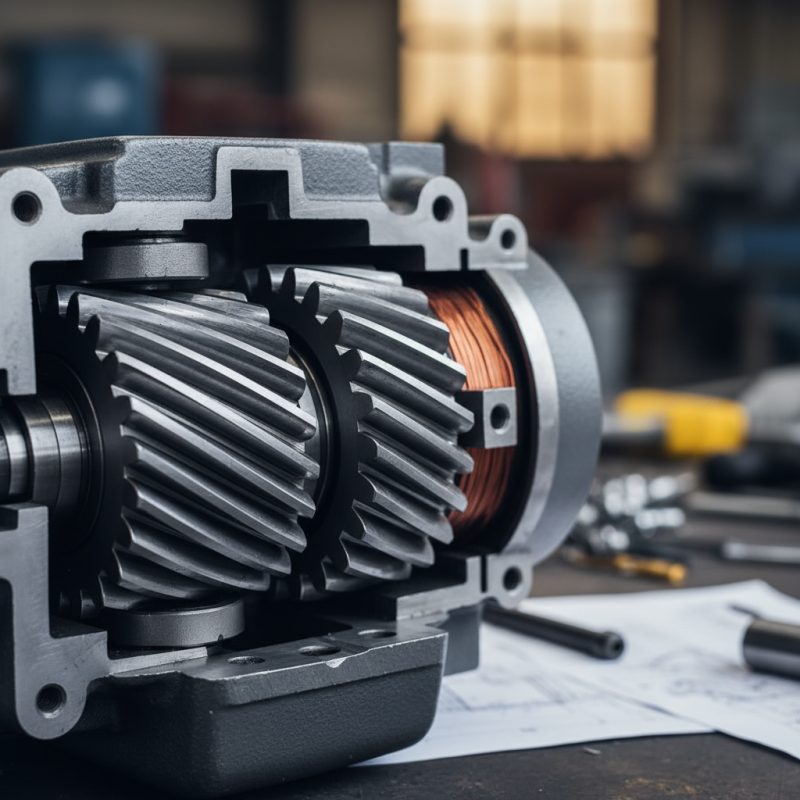
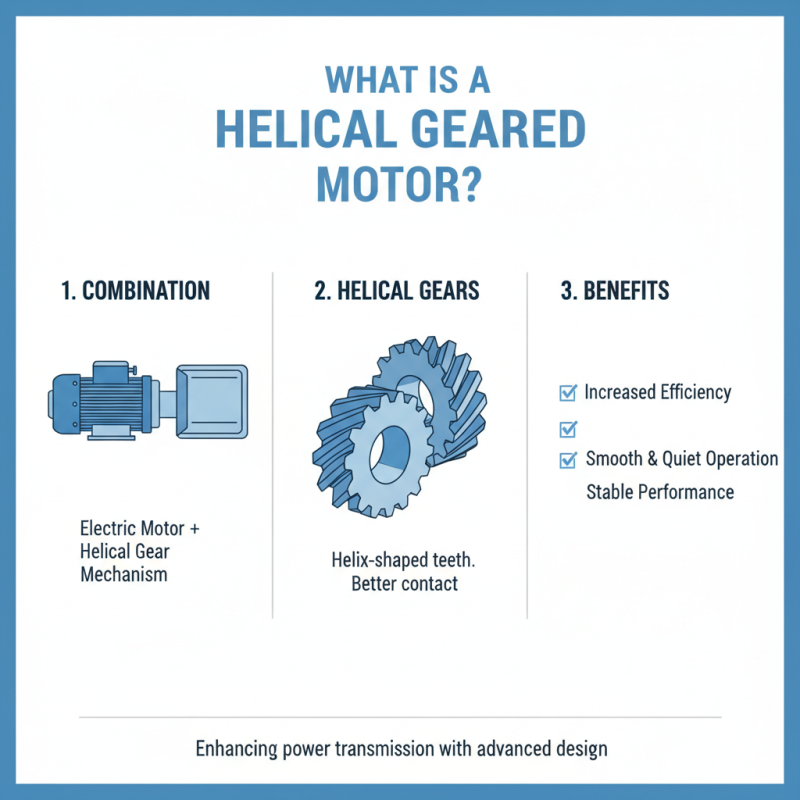
A helical geared motor is a unique combination of a helical gear mechanism and an electric motor. This design enhances efficiency and provides smooth operation. The gears are shaped like a helix, which allows for better contact between the teeth. This results in quieter and more stable performance compared to other gear types.
In operation, when the electric motor spins, it turns the input shaft. This motion is transferred to the helical gears, converting rotary motion into the desired output speed and torque. It’s fascinating how this system can achieve high torque at low speeds. However, it’s crucial to select the correct motor specifications to avoid inefficiencies. Improper sizing can lead to overheating or excessive wear.
Helical geared motors are widely used in various industrial applications. They can be found in conveyor systems, robotics, and more. The intricate design makes them robust yet complex. Some might find the installation process challenging or may overlook maintenance details. Regular checks are necessary to ensure optimal performance.
Basic Components of Helical Geared Motors
Helical geared motors consist of several basic components. The main parts include the helical gears, motor, housing, and output shaft. These gears are designed in a way that allows for smoother and quieter operation. The motor provides the necessary torque to initiate motion. In turn, the housing encases the components, keeping everything secure.
One important aspect is the gearing system. Helical gears work at an angle, allowing for better load distribution. This design improves the motor's efficiency while minimizing wear and tear. It's essential to ensure proper alignment to prevent any unusual noise or vibrations.
Tips: Regular maintenance helps prolong the life of helical geared motors. Check for signs of wear and lubrication regularly. If there are any unusual sounds, it might indicate misalignment or damage. Always consult with an expert when in doubt. This can prevent costly repairs or replacements down the line. Understanding these components will help users appreciate the motor's functionality better. However, intricate details can often be overlooked, leading to inefficiencies. Addressing these details is crucial for optimal operation.
Helical Geared Motors: Efficiency Analysis
How Helical Gears Function in Motors
Helical gears play a crucial role in the design of geared motors. They convert rotational motion effectively. The teeth of helical gears are positioned at an angle, providing smoother engagement than straight-cut gears. This design reduces noise and vibration during operation, making them ideal for industrial applications.
According to a report by the Global Gearbox market, helical gears account for around 40% of the global gear market. This increase is attributed to their efficiency and durability. With an efficiency rate of up to 98%, they minimize energy loss, improving overall performance. Their ability to handle heavy loads also benefits various machinery, from conveyor systems to pumps.
However, not all applications require helical gears. Sometimes, their complexity and cost are drawbacks. For lighter loads or simpler designs, spur gears may suffice. It’s essential to evaluate the specific requirements of a project, focusing on efficiency, torque, and load capacity. The choice of gearing can heavily impact performance and longevity.
Applications of Helical Geared Motors
Helical geared motors play a crucial role in many industries. Their design allows for smoother and more efficient power transmission. This is why they are commonly found in manufacturing, conveyor systems, and robotics. The ability to handle high loads while maintaining a compact size makes them appealing. Many factories utilize these motors for precise control over machinery.
Construction and agricultural sectors also benefit from helical geared motors. They provide the necessary torque for heavy equipment. Whether in a tractor or a lifting device, the reliability of these motors is essential. The ability to work under various conditions adds to their versatility. It’s interesting to note that while helical geared motors offer advantages, they can also lead to challenges in maintenance. Regular checks are needed to ensure optimal performance over time.
Elevator systems and HVAC units use these motors as well. Their efficiency improves energy usage. However, if not properly installed, they may face overheating issues. This suggests that attention to detail is necessary during setup. The applications of helical geared motors are diverse, each requiring specific considerations for the best results.
Advantages of Using Helical Geared Motors
Helical geared motors offer several advantages that make them a popular choice in various industries. Their unique design allows for smooth and efficient power transmission. This leads to reduced noise levels during operation. Such motors are also compact, making them suitable for tight spaces. Their efficiency contributes to lower energy consumption. This is a significant factor for manufacturing facilities focused on sustainability.
Another key benefit is their durability. Helical geared motors can handle high loads and are less prone to wear. This longevity reduces maintenance costs and downtime. However, selecting the right motor for your application is critical. Not every helical geared motor suits every task. It’s important to match specific speed, torque, and mounting requirements. Understanding your needs helps avoid inefficiencies.
Additionally, while these motors perform well, they can be more complex than other options. Installation may require skilled technicians, adding to initial costs. Recognizing these potential drawbacks is essential for effective decision-making. Ultimately, weighing the pros and cons helps achieve optimal performance in your operations.
What is a Helical Geared Motor and How Does it Work? - Advantages of Using Helical Geared Motors
| Feature |
Description |
| Design |
Helical gears provide a smoother and quieter operation compared to parallel gears due to their increased surface contact. |
| Efficiency |
High efficiency in transmitting power, which can be as high as 95% or more, reducing energy losses. |
| Load Capacity |
Able to handle larger loads due to their design, making them suitable for heavy-duty applications. |
| Applications |
Widely used in industrial machinery, conveyors, and automotive applications where torque and precision are essential. |
| Maintenance |
Requires less maintenance compared to other geared systems, attributed to their durability and fewer moving parts. |
| Cost |
Often higher initial cost but offers long-term savings due to durability and efficiency. |