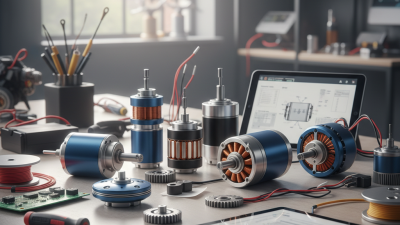
Global buyers choosing a Brushless Motor manufacturer must look beyond headline power ratings. A motor’s real performance depends on its load, speed range, control system, and operating environment. A compact motor in a medical device, for example, faces different demands from one driving an industrial pump. Torque-speed curves, thermal limits, encoder options, and protection ratings can reveal more than a product-page summary. Details matter.
This guide introduces ten manufacturers serving international markets and offers a practical starting point for supplier research. It considers product range, engineering support, customization, production capacity, and access to technical documentation. These factors can help buyers prepare questions about samples, lead times, testing, and ongoing supply. Yet no single list can fit every application. That is an imperfect shortcut, and buyers should verify each supplier’s current capabilities against their own specifications. A strong candidate may still be unsuitable if its standard dimensions, control options, or delivery schedule do not match the project. Small differences count. Treat the manufacturers below as options to investigate, not as a universal ranking. Reliable decisions come from comparing documented specifications and discussing real operating conditions with qualified supplier teams.
Brushless motors use electronic switching instead of carbon brushes to energize the stator windings. Permanent magnets sit on the rotor, while a controller times the current to produce rotation. This design avoids brush wear and can improve efficiency, but it makes the controller an essential part of the system. Small detail, big impact. A motor’s label alone cannot determine whether it suits a machine. Voltage, speed range, cooling, and load profile all matter.
One useful distinction is how the controller tracks rotor position. Sensored motors use position sensors, which can support controlled starts at low speed. Sensorless motors estimate rotor position from electrical signals, reducing sensor hardware but potentially complicating startup under heavy loads. Another distinction is rotor layout. Inrunner designs place the rotor inside the stator and often suit compact, high-speed applications. Outrunner designs rotate an outer shell and can provide higher torque at lower speeds. These categories can overlap with different control methods. That can make product comparisons confusing. A careful specification review should check continuous torque, operating temperature, and the controller’s compatibility, not just advertised peak speed. Even then, real operating conditions may expose a trade-off that a datasheet cannot fully capture.
When evaluating brushless motor manufacturers, compare measured performance, not headline claims. The IEA’s 2011 report, Energy-Efficiency Policy Opportunities for Electric Motor-Driven Systems, estimates that motor-driven systems consume about 45% of global electricity. This figure covers many motor types, not brushless motors alone, but it shows why efficiency data matters. Request test conditions, efficiency curves, torque-speed charts, and temperature-rise results. Check that reported values match your voltage, load, and duty cycle.
Ask how each unit is tested across production batches. A smooth sample motor is not enough. Review bearing life, winding insulation, rotor balance, noise, and protection against dust or moisture. Confirm whether the supplier can provide traceable test records, stable lead times, replacement parts, and engineering support. For demanding applications, request thermal tests under realistic loads; a bench result may not reflect heat inside a compact enclosure. A polished datasheet can still leave gaps.
Tip: Compare the same operating point across suppliers. Ask for a sample report and inspect the raw readings, not only pass/fail results. Then test a motor in your own assembly. Small details, like mounting vibration, can change the outcome.
Choosing among the top ten brushless motor manufacturers starts with the duty cycle, not the catalogue headline. Record torque, speed range, ambient temperature, and operating hours before requesting quotations. That worksheet can reveal mismatches early.
The International Energy Agency’s Energy Efficiency 2023 report says motor-driven systems consume more than 40% of global electricity. This makes efficiency claims worth checking against test conditions, not just brochure percentages. Ask for efficiency curves, thermal limits, bearing-life assumptions, and vibration readings at your actual load. Small details matter. The U.S. Department of Energy’s 2014 motor-systems sourcebook reports that motors use about 69% of U.S. manufacturing electricity. Treat this as an industrial benchmark, not a universal factory figure.
For global procurement, compare suppliers on documentation, sample consistency, customization capacity, and after-sales response across time zones. Request test records for the exact motor configuration, including controller and cooling method. A published rating may not match your enclosure or installation. I would keep any supplier ranking provisional; factory data can look tidier than field performance. Check lead times against production capacity, and ask how failures are analyzed. A clear answer is useful. A vague one deserves follow-up. Can the supplier provide traceable test results for your intended operating conditions?
A technical reference for global buyers comparing brushless motor designs. The chart shows idealized trapezoidal back-EMF waveforms for a three-phase BLDC motor; actual waveforms vary by motor design and operating conditions.
A strong brushless motor manufacturer should show clear engineering capability, not just a broad catalogue. Look for options across frame sizes, voltage ratings, torque levels, and cooling methods. Practical evidence matters: dimensional drawings, efficiency curves, winding data, and test reports help buyers match a motor to a real machine. Ask how the supplier handles custom shafts, connectors, or mounting patterns. Small details can delay integration.
Tips: Request a sample and a written test plan. Check noise, temperature rise, vibration, and performance under your expected load. Confirm lead times for both samples and repeat orders. A polished specification sheet is useful, but it cannot replace testing.
Certifications can support confidence in quality and safety processes, but their scope matters. Verify the certificate holder, covered facility, product category, and current validity with the issuing body. Do not assume a factory-level quality certificate proves every motor meets your application’s requirements. Some documents look reassuring at first glance. Read the fine print, and clarify who performs final inspection, how defects are recorded, and what traceability data accompanies each shipment. Even experienced buyers can overlook these checks. It happens.
| Profile | Primary Capability | Typical Product Range | Common Customization Options | Potentially Relevant Standards and Compliance | Buyer Due-Diligence Focus |
|---|---|---|---|---|---|
| Manufacturer 01 | Industrial automation and servo motion | Brushless servo motors, integrated motor-drive units, and motor assemblies for automated machinery | Encoder or resolver feedback, brake, shaft and flange configuration, winding, and drive matching | IEC 60034 may apply to rotating electrical machines; ISO 9001 concerns quality-management systems. Verify the exact product and facility scope. | Request torque-speed curves, feedback-device specifications, thermal limits, and drive compatibility data. |
| Manufacturer 02 | Automotive and vehicle auxiliary systems | Brushless motors for pumps, fans, actuators, and other vehicle subsystems | Automotive-grade components, connector and sealing options, temperature range, and application-specific winding | IATF 16949 is an automotive quality-management system standard; it does not certify an individual motor. Confirm certification scope and customer-specific requirements. | Check environmental validation, traceability, change control, production approval requirements, and lifecycle support. |
| Manufacturer 03 | HVAC and building equipment | Brushless motors for air-moving equipment, ventilation, pumps, and heating or cooling systems | Fan or pump matching, speed-control interface, mounting, noise targets, and environmental protection | IEC 60034 may be relevant to motor design and ratings; UL 1004 may be relevant for motors evaluated for applicable North American markets. Confirm the product listing and intended use. | Compare efficiency data, acoustic performance, operating range, controller requirements, and installation constraints. |
| Manufacturer 04 | Household and commercial appliances | Brushless motors for appliances, compact pumps, fans, and related drive assemblies | Form factor, shaft design, connectors, speed-control method, and appliance-specific test requirements | RoHS requirements may apply to restricted substances in electrical and electronic equipment. CE is a conformity marking, not a standalone product certification; verify applicable legislation and documentation. | Request material declarations, electrical safety evidence, endurance-test conditions, and production consistency data. |
| Manufacturer 05 | Robotics and collaborative automation | Compact servo motors and brushless motor assemblies for robotic joints, actuators, and positioning axes | Low-backlash mechanical interfaces, encoder selection, brake options, cable routing, and integrated sensing | IEC 60034 may apply to motor characteristics; machinery safety standards apply at system level and depend on the complete machine design. | Assess torque density, inertia, thermal behavior, encoder resolution, duty cycle, and integration documentation. |
| Manufacturer 06 | Medical and laboratory equipment | Small brushless motors for laboratory instruments, pumps, sample handling, and medical-device subsystems | Low-noise operation, compact dimensions, cleanable surfaces, tailored connectors, and controlled production requirements | ISO 13485 applies to quality-management systems for medical devices; IEC 60601 addresses medical electrical equipment at the applicable equipment or system level. Verify intended-use scope and regulatory responsibilities. | Clarify whether the motor is a component or finished device, and review risk, traceability, validation, and change-control documentation. |
| Manufacturer 07 | Power tools and portable equipment | Brushless motors for handheld tools, battery-powered equipment, and compact high-output drives | Motor-controller pairing, thermal protection, shaft interface, speed range, and battery-platform requirements | UL 1004 may be relevant to motor safety evaluation in applicable markets; finished-tool standards and requirements should be assessed separately. | Review peak and continuous ratings, cooling assumptions, overload behavior, vibration, and endurance-test results. |
| Manufacturer 08 | Micromotors and precision mechanisms | Small-diameter brushless motors and compact motor assemblies for instruments, optical equipment, and precision devices | Winding and connector options, miniature feedback devices, shaft tolerances, and custom mounting features | IEC 60034 may be relevant depending on motor type and application; material and market-access requirements must be confirmed for the finished product. | Ask for dimensional tolerances, cogging and noise data, bearing life assumptions, and sample-to-production controls. |
| Manufacturer 09 | Electric mobility and light-vehicle drives | Brushless motors and drive assemblies for e-bikes, scooters, light electric vehicles, and related equipment | Wheel or frame integration, speed sensing, controller matching, environmental sealing, and voltage configuration | Applicable vehicle and electrical safety requirements vary by product type and destination market. Confirm the required test reports and approvals for the complete vehicle or system. | Verify continuous versus peak output ratings, thermal limits, ingress protection evidence, and controller compatibility. |
| Manufacturer 10 | High-speed and specialized industrial drives | High-speed brushless motors for spindles, compressors, pumps, and other specialized industrial equipment | Rotor and bearing configuration, cooling method, drive parameters, balancing grade, and application-specific interfaces | IEC 60034 may apply to relevant motor ratings and performance; machine-level safety and conformity requirements depend on the complete installation. | Request speed limits, balancing information, bearing and lubrication details, cooling requirements, and inverter operating limits. |

Certification and standards references above identify frameworks that may be relevant to the stated applications; they are not claims that any anonymous supplier holds a certification or that a specific product is certified. Confirm certificate validity, issuing body, product scope, manufacturing site, and destination-market requirements directly with each supplier.
Matching a brushless motor manufacturer starts with the machine, not the ranking. Define required speed, torque, duty cycle, voltage, cooling, and operating temperature. A compact motor driving a handheld tool faces different demands from one running a conveyor for long shifts. Ask for test data at your actual load, not only peak efficiency. IEA’s Global EV Outlook 2024 reports nearly 14 million electric cars sold in 2023, around 18% of global car sales. This growth is one reason to assess suppliers’ production capacity and quality controls carefully, especially for mobility applications.
Check what each manufacturer can document: winding and magnet specifications, vibration and noise results, thermal limits, and repeatability between samples. Request a prototype and a clear plan for handling design changes. Compare lead times, minimum order quantities, communication, and after-sales support alongside price. A polished datasheet helps, but it cannot prove that a motor will fit your enclosure or survive your real duty cycle. I would not treat a single sample as proof of stable mass production.
Tips: Send suppliers the same requirements sheet and ask each to identify one technical risk. Compare answers, not just quotations. Small details matter. A cable exit that clashes with a bracket can delay an otherwise sound design.