How to Choose the Right Stepper Gearbox for Your Project?
Choosing the right stepper gearbox can be a daunting task. Each project has its unique demands. A well-matched stepper gearbox elevates performance and efficiency. It’s crucial to understand your project’s requirements before making a decision.
Start by identifying your application. Consider load, torque, and speed. These factors influence how effectively a stepper gearbox will perform. Not all gearboxes are created equal. Some may not handle high loads well, leading to failures. Testing and research are necessary to avoid pitfalls.
Don’t overlook manufacturer specifications. They provide essential insights into the gearbox functionalities. Reviews and expert opinions can guide your choice. However, bear in mind that every project is distinctive. What worked for one may not suit another. Always reflect on the specifics to ensure a reliable selection.
Understanding the Basics of Stepper Gearboxes
Stepper gearboxes play a crucial role in various applications, from robotics to CNC machinery. Understanding their basics can help you select the right type for your project. A stepper gearbox can enhance motor performance by translating rotational movement into precise linear motion. Research indicates that using the proper gearbox can increase system efficiency by up to 30%.
One key factor to consider is the gearbox ratio. A higher ratio may provide greater torque but will reduce speed. Conversely, a lower ratio allows faster operation but sacrifices torque. According to industry data, most applications benefit from gear ratios between 1:10 and 1:50, balancing speed and torque requirements effectively.
Tips for choosing the right stepper gearbox: Analyze your application needs. Identify critical performance metrics like speed, torque, and load. Don’t overlook environmental factors, such as temperature and humidity, which can impact gearbox performance. It’s essential to consider material durability and lubrication requirements, too. Use simulation software to model performance under different conditions. It can provide insights into how the gearbox will perform in real-world scenarios.
Reflect on the potential pitfalls. Selecting a gearbox without thorough consideration can lead to inefficient operation. Always consult technical specifications and peer-reviewed reports when possible. This approach ensures a more informed decision-making process. Remember, the right choice will contribute significantly to your project's overall success.
Key Factors to Consider When Selecting a Stepper Gearbox
When selecting a stepper gearbox for your project, it's vital to consider several key factors. The application of the gearbox will determine your needs. Consider the torque requirements. High torque is essential for heavy loads, while lighter applications may not need as much. Analyzing the intended operation conditions helps in choosing the right gearbox type.
Gear ratio is another critical factor. A higher gear ratio will yield increased torque but lower speed. Conversely, a lower ratio offers speed with reduced torque. You must find the right balance based on your tasks, as mismatched ratios can lead to inefficient operation. Evaluate your project's demands carefully.
Tips: Always consult with an expert if you're uncertain. Sometimes, a team discussion can uncover insights that one individual might miss. Test different ratios with prototypes to see how they perform under real conditions. Keep a journal of your findings to avoid repeating mistakes. The selection process isn't perfect; learn from each attempt.
Comparison of Stepper Gearbox Parameters
Evaluating Compatibility with Your Project Specifications
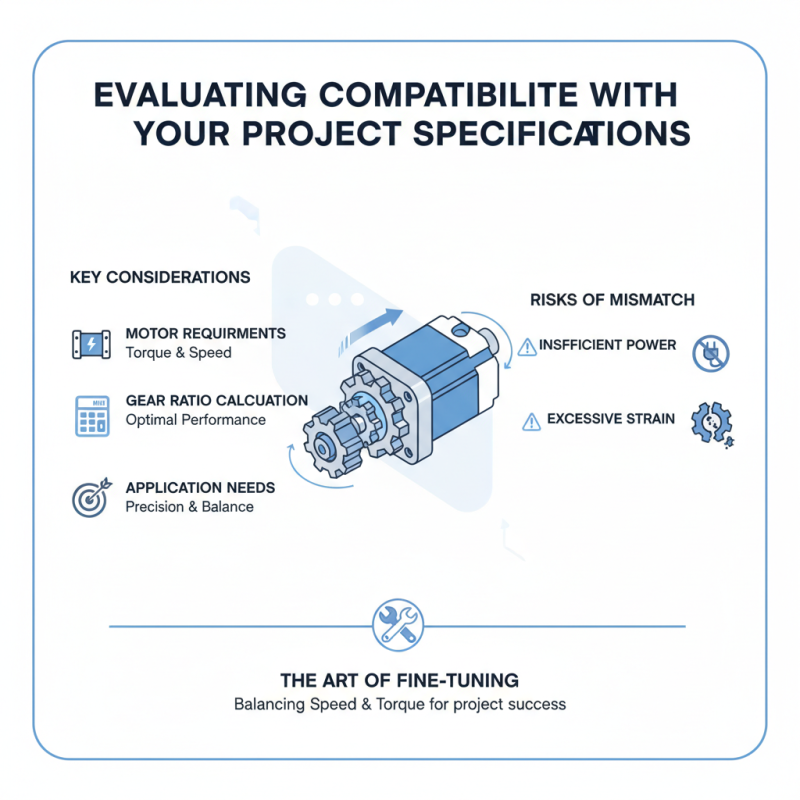
When choosing a stepper gearbox, compatibility with your project specifications is crucial. Start by identifying your motor's torque and speed requirements. Calculate the necessary gear ratios to achieve optimal performance. A mismatch can lead to insufficient power or excessive strain. Understanding your application's precise needs is an art. Balance between speed and torque often requires fine-tuning.
Evaluate your space constraints. Gearbox sizes vary, and fitting one into a limited area can be challenging. Consider the mounting options as well. Is the gearbox easily adaptable to your existing setup? Moreover, analyze how the gearbox’s weight affects your project dynamics. Heavy components can complicate movement.
Assess the material quality of the gearbox. Robust materials enhance durability but can also increase weight. In some cases, heavier units may complicate operation. This trade-off is worth reflecting on. Take time to research other projects similar to yours. There's always value in learning from past attempts, both successes and failures. Knowing what has or hasn’t worked can guide your decision-making process to find the right stepper gearbox.
Assessing Torque and Speed Requirements for Optimal Performance
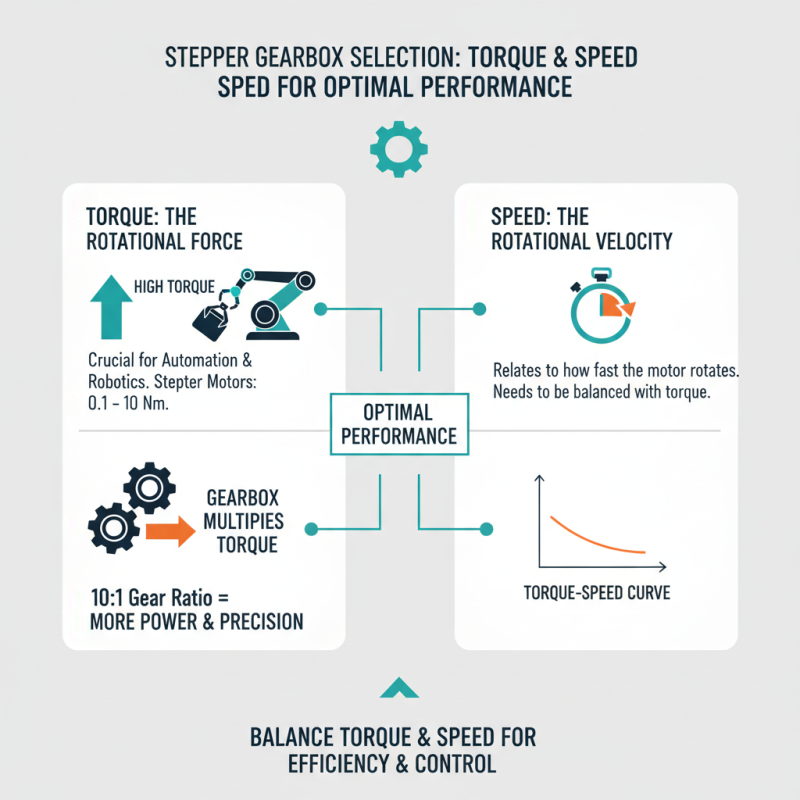
When selecting a stepper gearbox, understanding torque and speed requirements is crucial for achieving optimal performance. Torque measures the force that can cause an object to rotate. High torque is needed for applications like automation and robotics. According to industry reports, stepper motors can typically deliver a torque ranging from 0.1 to 10 Nm. However, selecting the right gearbox can multiply this torque, enhancing efficiency. Engineers often find that a gearbox with a gear ratio of 10:1 can increase torque significantly, translating to more power in applications that require precise control.
Speed is equally important. Each project has a target speed range that must be met for effective operation. For instance, a standard stepper motor operates between 200 and 1,200 RPM. Gearboxes can reduce motor speed while increasing torque, providing better control for slower-moving applications. A common practice is to calculate the required RPM at the output side. Taking into account the load and desired speed, adjustment of the gear ratio helps ensure the motor runs within its efficiency range.
Choosing the correct stepper gearbox isn't always straightforward. Engineers frequently need to balance torque and speed while considering other factors like weight and application type. The interplay of these elements often leads to trial-and-error scenarios. Focus on testing prototypes under real-world conditions to refine your selection.
Exploring Different Types of Stepper Gearboxes and Their Applications
When selecting a stepper gearbox, understanding the various types and their applications is crucial. Planetary gearboxes are favored for their compact design and high efficiency. They offer gear ratios that greatly enhance torque output. Linear actuators often pair well with these gearboxes, achieving precision in positioning tasks. According to industry reports, the market for planetary gearboxes is projected to grow by 7% annually due to rising automation needs.
Another common type is the spur gearbox. These are simpler and provide a straightforward design. They work best in applications where space is limited. However, spur gearboxes can be noisy and less efficient at high speeds. Their cost-effectiveness makes them suitable for entry-level projects. A recent study indicated that 30% of gear system failures arise from improper alignment and installation, highlighting the importance of careful selection and maintenance.
The choice between these gearboxes is often dictated by specific project requirements. Factors such as load capacity and speed must be considered. Users may face challenges in ensuring the right fit for their applications. Reflecting on these decisions can lead to improved performance down the line. Understanding the nuances of each gearbox type ensures a more informed choice for any engineering endeavor.
How to Choose the Right Stepper Gearbox for Your Project?
| Gearbox Type |
Reduction Ratio |
Torque Capacity (Nm) |
Efficiency (%) |
Typical Applications |
| Planetary Gearbox |
3:1 to 100:1 |
2 to 100 |
85 - 95 |
Robotics, CNC machines |
| Spur Gearbox |
5:1 to 50:1 |
1 to 20 |
80 - 90 |
Conveyor systems, small drives |
| Worm Gearbox |
10:1 to 80:1 |
5 to 50 |
60 - 75 |
Elevators, heavy machinery |
| Harmonic Drive |
30:1 to 250:1 |
10 to 300 |
90 - 96 |
Robotics, aerospace |