Top 10 Benefits of Using Planetary Gearboxes in Modern Applications?
Planetary gearboxes have become essential components in numerous modern applications. Their unique design offers substantial advantages over traditional gear systems. These advantages make them a preferred choice for many engineers and manufacturers.
In the world of automation, machinery is continuously evolving. Planetary gearboxes provide higher torque and efficiency. They are compact and lightweight, making them ideal for limited spaces. These gearboxes also minimize backlash, ensuring precision in motion control, which is critical for tasks like robotics and aerospace.
Despite their benefits, not all applications may require them. There are instances where simpler gear systems might suffice. It's essential to evaluate the specific needs and constraints of your project. Understanding these nuances helps ensure the best choice is made. Adopting planetary gearboxes can refine performance when the application demands.

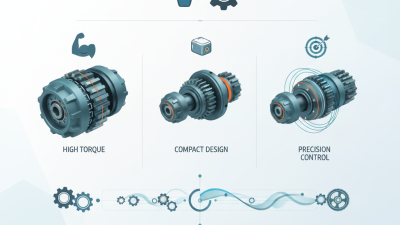
Benefits of High Torque Density in Planetary Gearboxes for Compact Designs
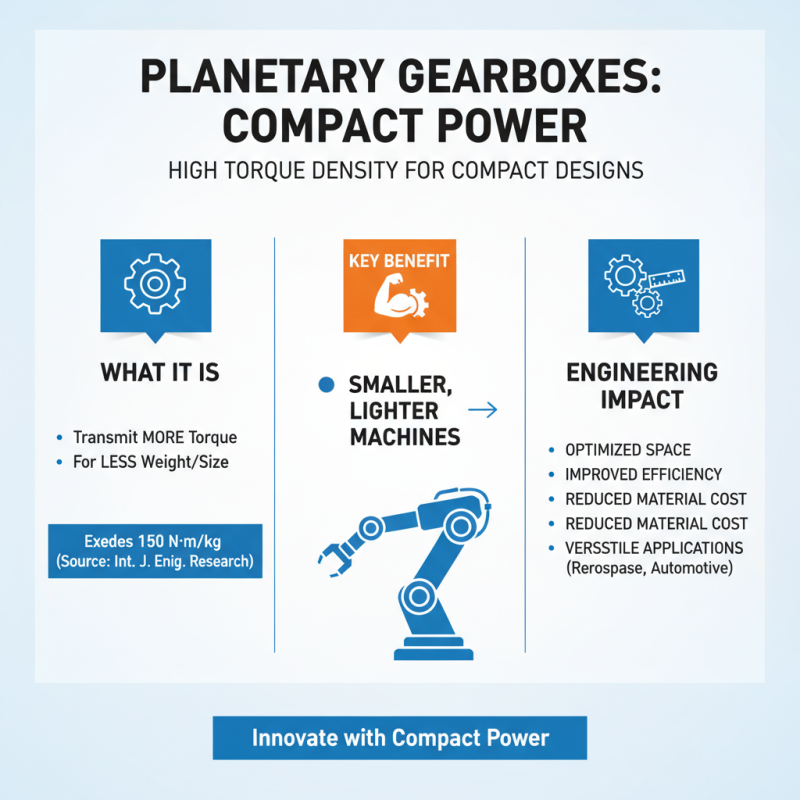
Planetary gearboxes are gaining traction for their high torque density. This characteristic is essential in applications requiring compact designs. A report from the International Journal of Engineering Research indicates that these gearboxes can achieve torque densities exceeding 150 N·m/kg. This efficiency allows engineers to design smaller and lighter machines without sacrificing performance.
Additionally, the compact nature of planetary gearboxes means they can fit into places traditional gear systems cannot. For instance, in electric vehicles, every inch counts. A study published by the Society of Automotive Engineers highlights that reducing gearbox size by just 10% can lead to a 3% increase in vehicle efficiency. High torque density thus supports innovations in space-constrained environments.
However, relying heavily on this technology also requires critical evaluation. As designs become more compact, challenges such as heat dissipation arise. Without proper management, overheating can lead to failures. Industry standards must evolve to address these risks effectively. This reflection ensures that advancements in planetary gearbox technology do not overlook crucial operational aspects.
Improved Efficiency Levels: How Planetary Gearboxes Reduce Energy Loss
Planetary gearboxes are increasingly popular in modern engineering due to their efficiency. These systems often reduce energy loss significantly. Recent reports from mechanical engineering journals highlight that planetary gear systems can achieve energy savings of up to 95%. This is critical for industries aiming to lower operational costs and enhance sustainability efforts.
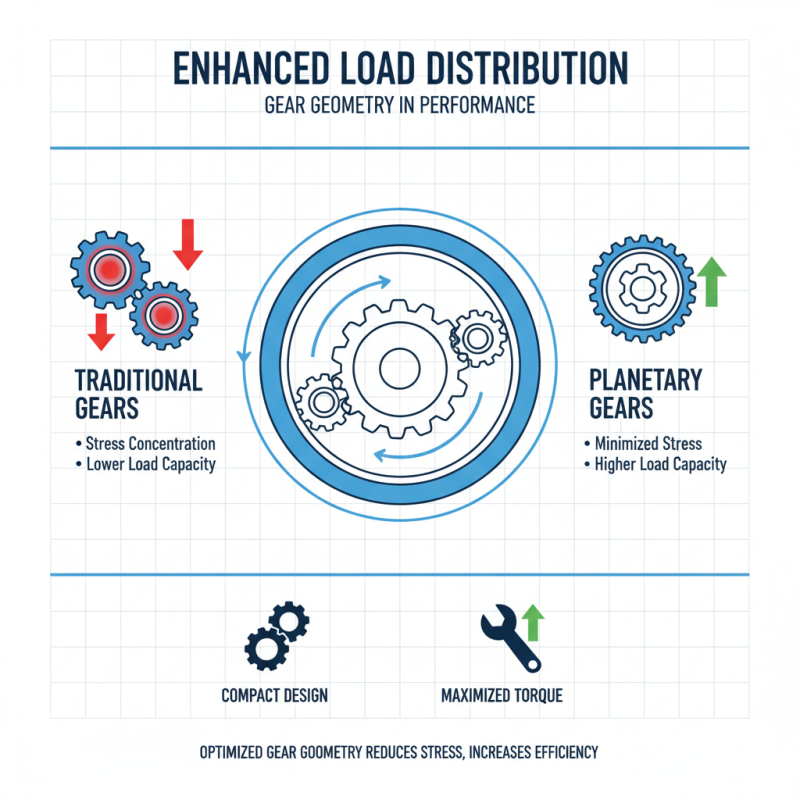
The unique design of planetary gearboxes allows multiple gears to engage simultaneously, distributing the load more evenly. This design minimizes friction and wear, which can lead to substantial energy loss in traditional systems. Studies indicate that energy losses in conventional gear systems can reach 15-30%. By contrast, planetary configurations can reduce this to as low as 5%, creating a remarkable difference in energy consumption.
In addition, this increased efficiency can also result in longevity of machinery. With reduced wear and tear, machinery using planetary gearboxes often experiences a decrease in maintenance needs. However, configuring them correctly is crucial. Poor design or mismatched components can lead to ineffectiveness. Adjustments in load capacity may also be needed based on real-world applications, adding complexity. Balancing the benefits and the challenges is key for optimal operation.
Versatility Across Applications: Industries Relying on Planetary Gear Systems
Planetary gear systems play a crucial role across various industries, showcasing remarkable versatility. These systems are renowned for their compact design and high efficiency, making them ideal for applications in robotics, aerospace, and automotive sectors. According to a recent industry report, nearly 60% of robotic systems utilize planetary gearboxes due to their ability to provide high torque in limited spaces. Such efficiency helps optimize performance without compromising reliability.
In aerospace applications, weight reduction is key. A study highlighted that using planetary gear systems can reduce component weight by up to 30%. This reduction directly impacts fuel efficiency and overall aircraft performance. Additionally, in the automotive sector, these gearboxes allow for smoother transmission of power, enhancing driver experience. The demand for electric vehicles has further pushed the industry to adopt planetary gear systems for their ability to handle high speeds and low noise levels.
Despite their advantages, there are challenges. Installation and maintenance can be complex, requiring skilled technicians. Misalignment during installation can lead to premature wear. Regular maintenance is essential to ensure longevity, yet it often gets overlooked. As industries continue to evolve, addressing these challenges will be key to maximizing the benefits of planetary gear systems.
Top 10 Benefits of Using Planetary Gearboxes in Modern Applications
| Benefit |
Description |
Application Example |
| High Torque Density |
Compact design allowing high torque output relative to size. |
Robotics |
| Efficiency |
Minimal energy loss leads to higher operational efficiency. |
Automated Machinery |
| Durability |
Robust design ensures long service life and reduced maintenance. |
Mining Equipment |
| Versatility |
Suitable for various applications across multiple industries. |
Automotive Sector |
| Load Distribution |
Efficiently distributes load across multiple gear teeth. |
Aerospace Applications |
| Compact Size |
Small footprint allows for integration in tight spaces. |
Medical Equipment |
| Reduction ratios |
Wide range of reduction ratios available for different applications. |
Industrial Conveyors |
| High Speed Performance |
Can operate at high speeds without losing efficiency. |
Printing Machinery |
| Backlash Minimization |
Designed to reduce backlash for precise control. |
CNC Machines |
| Noise Reduction |
Operates quietly, making them suitable for noise-sensitive environments. |
Elevators |
Longevity and Maintenance: Reliability Statistics for Gearbox Lifespan
Planetary gearboxes are known for their impressive durability and efficiency. Their design minimizes wear on the gears, extending their lifespan significantly. Many users report operational lifespans exceeding ten years under optimal conditions. In industries such as robotics and manufacturing, this reliability is crucial. Daily operations depend on components that can withstand heavy use without frequent maintenance.
Statistics show that planetary gearboxes require less maintenance compared to traditional gear systems. This infrequent need for servicing can lead to substantial cost savings. Nevertheless, maintenance is still necessary to avoid unexpected failures. Regular checks can identify potential issues before they escalate. Even with a long lifespan, overlooking minor wear can lead to operational disruptions.
Choosing planetary gearboxes can enhance reliability. However, users must remain vigilant. The lifecycle of a gearbox can vary greatly based on application and environment. Not all setups allow for optimal performance. Therefore, monitoring conditions and maintaining communication with experts in the field is essential for ensuring lasting reliability.
Top 10 Benefits of Using Planetary Gearboxes in Modern Applications